
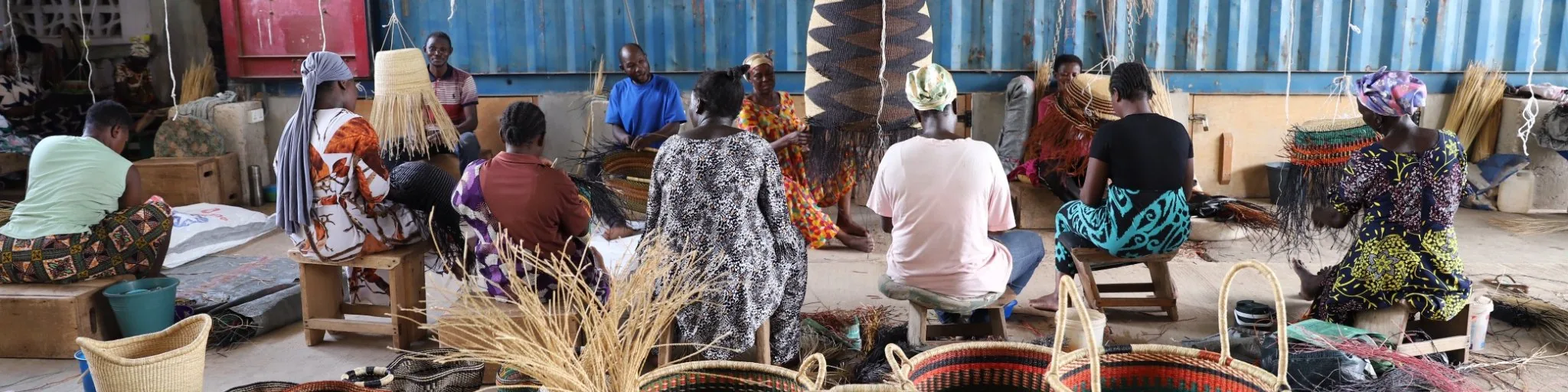
How to Make a Bolga Basket
We are often asked how to make a Bolga basket. Well watch below and you will discover how we do it from straw to finished basket.
A Baba Tree Bolga basket begins long before the weaving starts.
Most of our straw is imported from Ghana’s wetter south.
However, owing to urbanisation, galamsey (illegal goldmining) and cash crops such as cocoa and palm oil, the wildcrafted straw that is used for weaving in Bolgatanga is under threat.
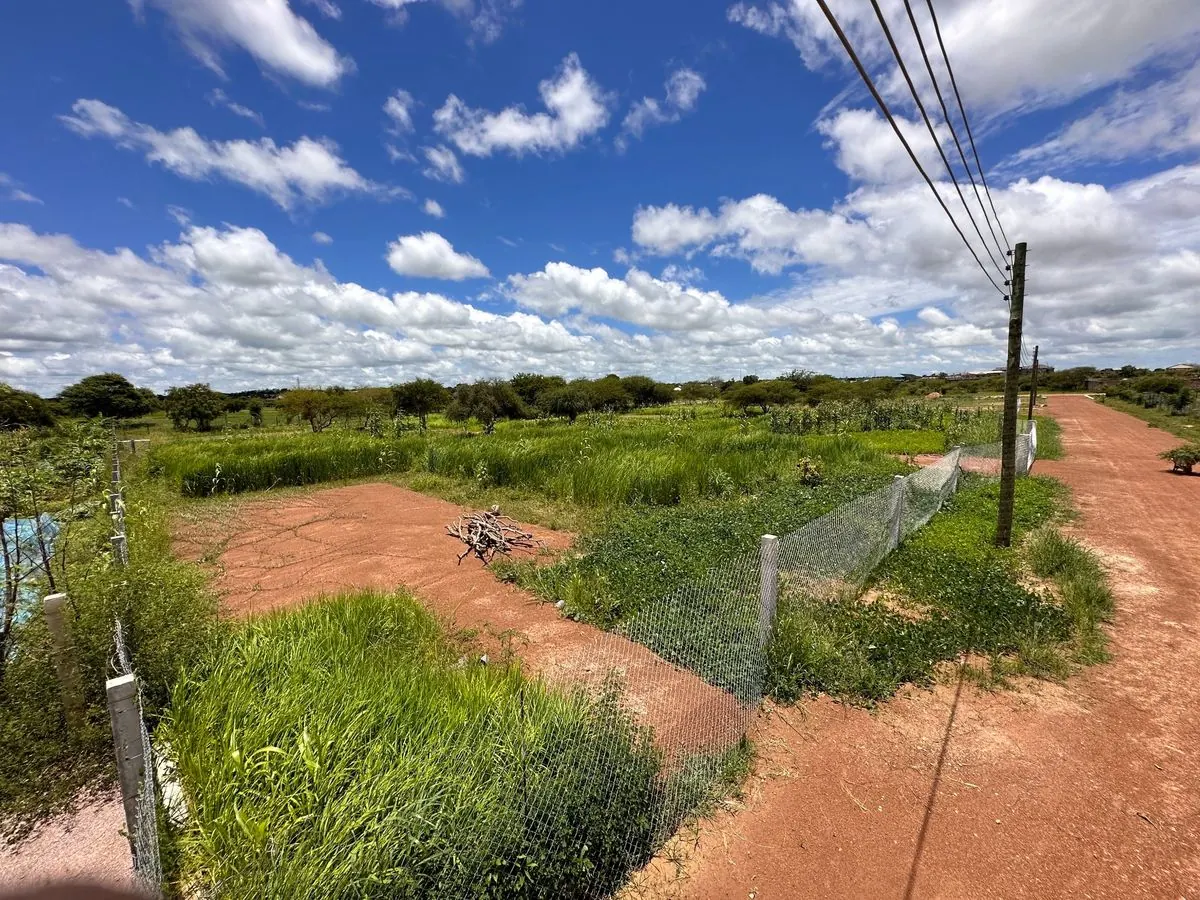
We at The Baba Tree have started trial runs growing our own straw, both the southern straw predominantly used in the Bolga basket industry, and the finer, indigenous straw that was traditionally used for weaving in these parts that The Baba Tree continues to use for some of our products.
Before a basket takes shape, the straw has to be found, bought, split, rolled, unravelled, measured and assessed (as to whether a particular stock of straw will be used for the warp or the weft), dyed and dried.
Then comes the weaving, finishing and, for some baskets, leatherwork.
It’s important to note that, as far as we are aware, The Baba Tree is the only Bolga basket producer that factors the hours, sometimes days, spent preparing the straw into what the weaver is paid upon completion of a basket.
Watch the process
The basket begins with the straw
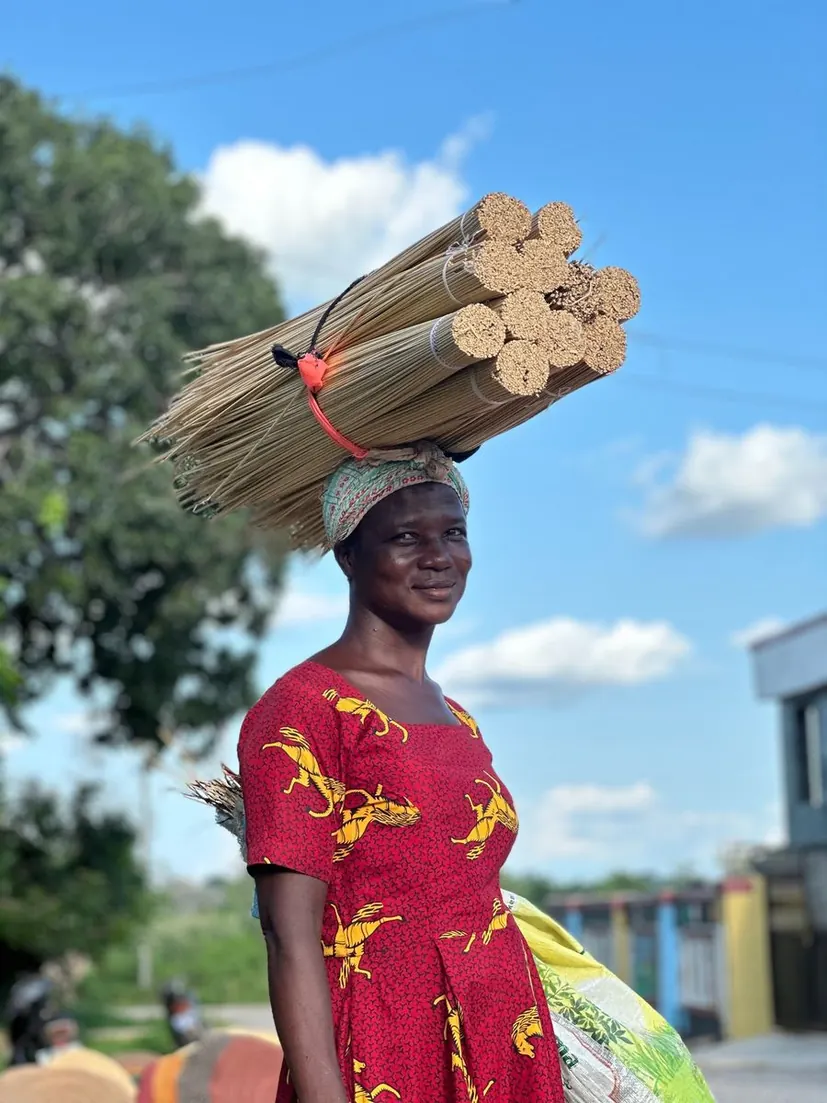
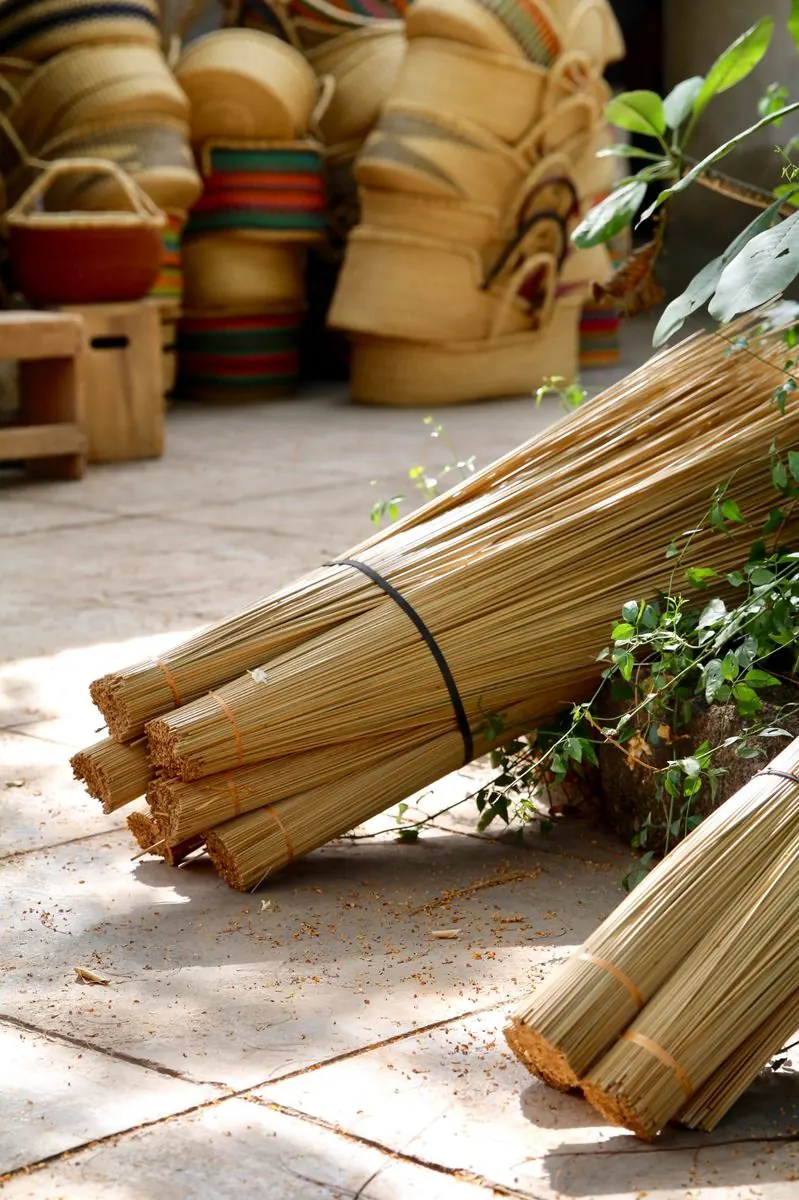
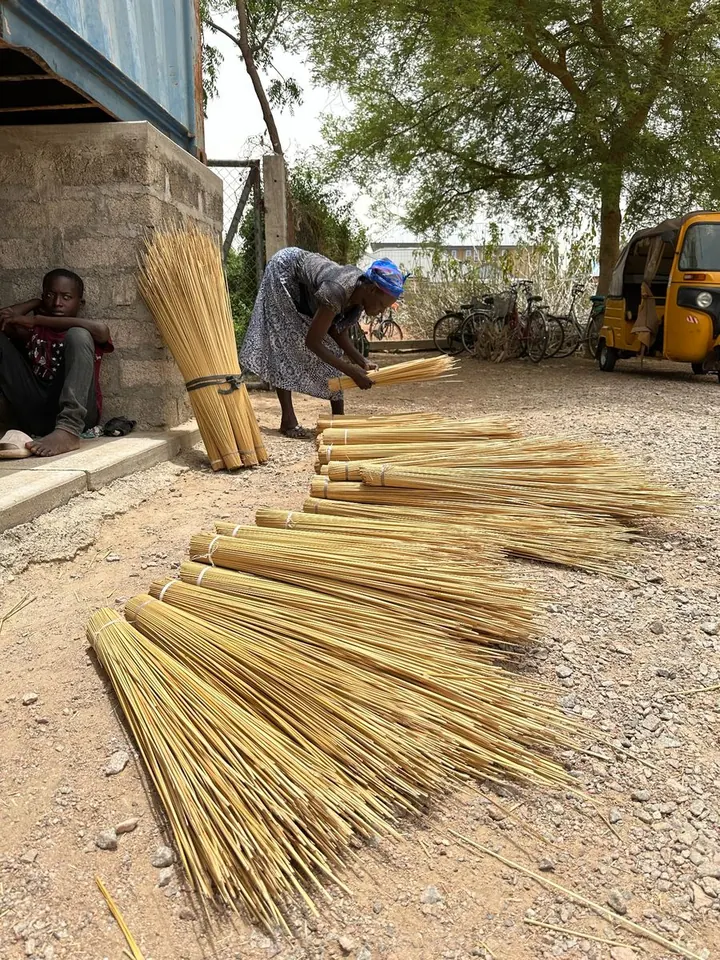
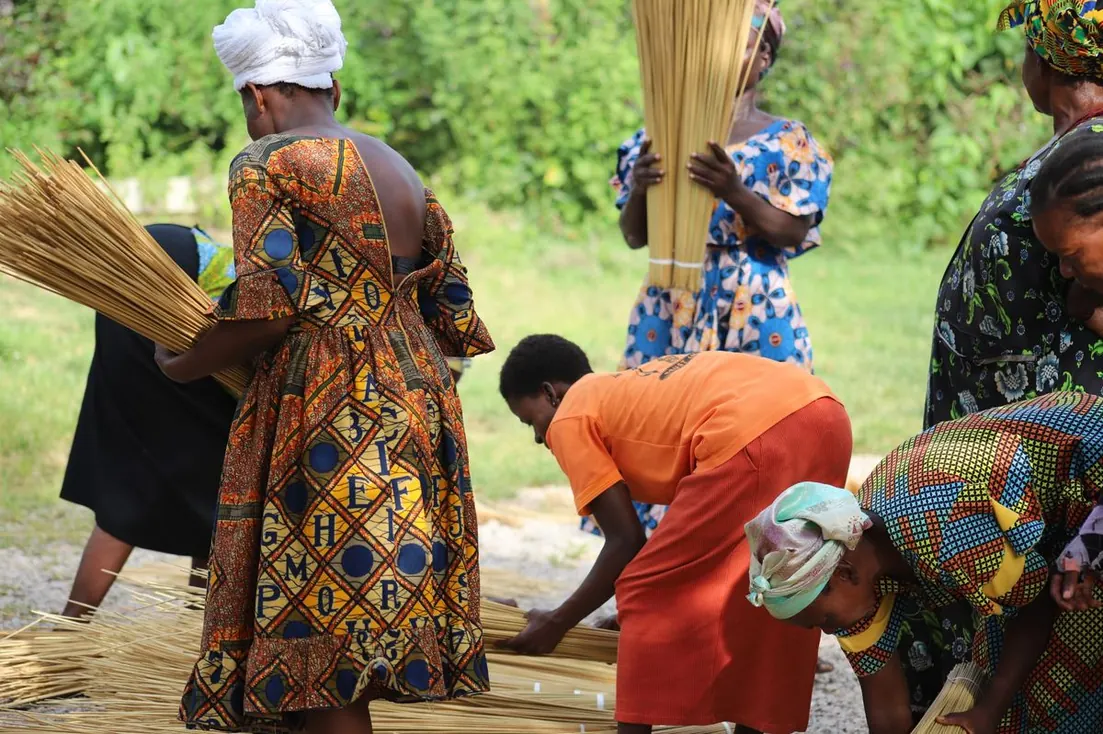
Most of the straw we use arrives at The Baba Tree compound in bundles swaying precariously on the top of a vendor’s head.
At times, straw will arrive on a 3 wheeler.
Other times, a group of weavers might pool their money to buy a substantial amount of straw together.
When straw does arrive at The Baba Tree compound, weavers cast a very critical eye over what is for sale and choose very carefully. They know what straw works for them personally.
Weavers who utilise the ‘single weave’ technique (half as many warps and wefts) used for weaving laundry baskets or woven storage tubs will choose a thicker straw.
We are also growing our own
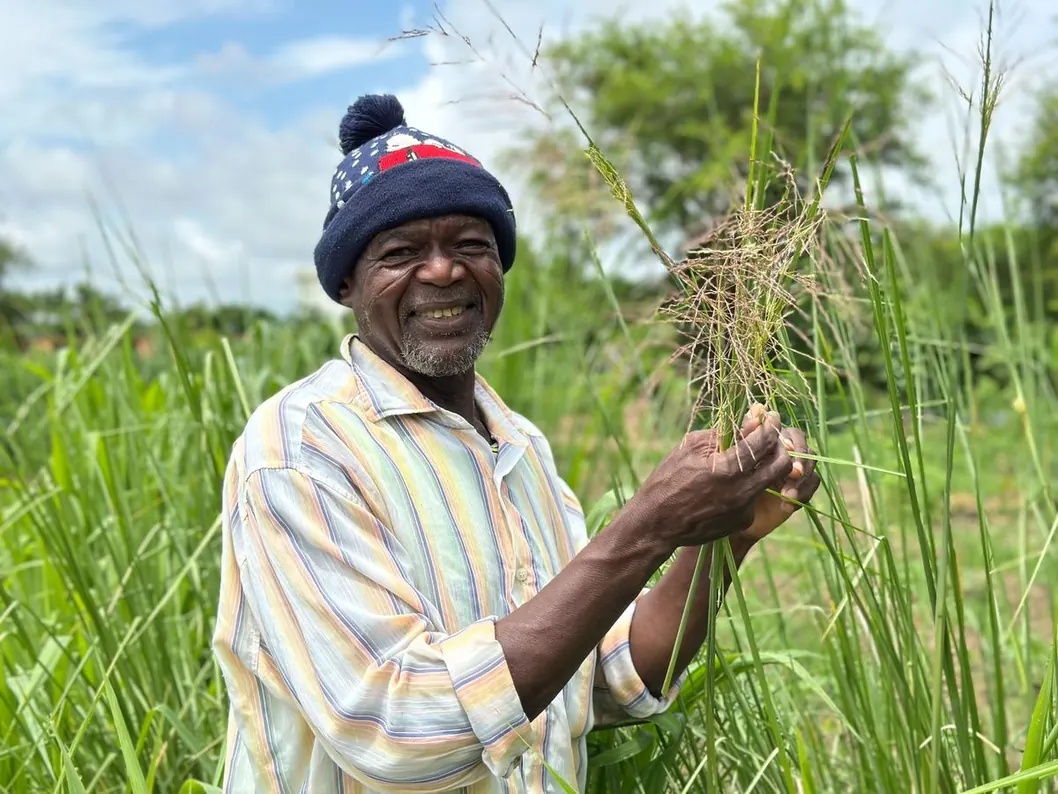
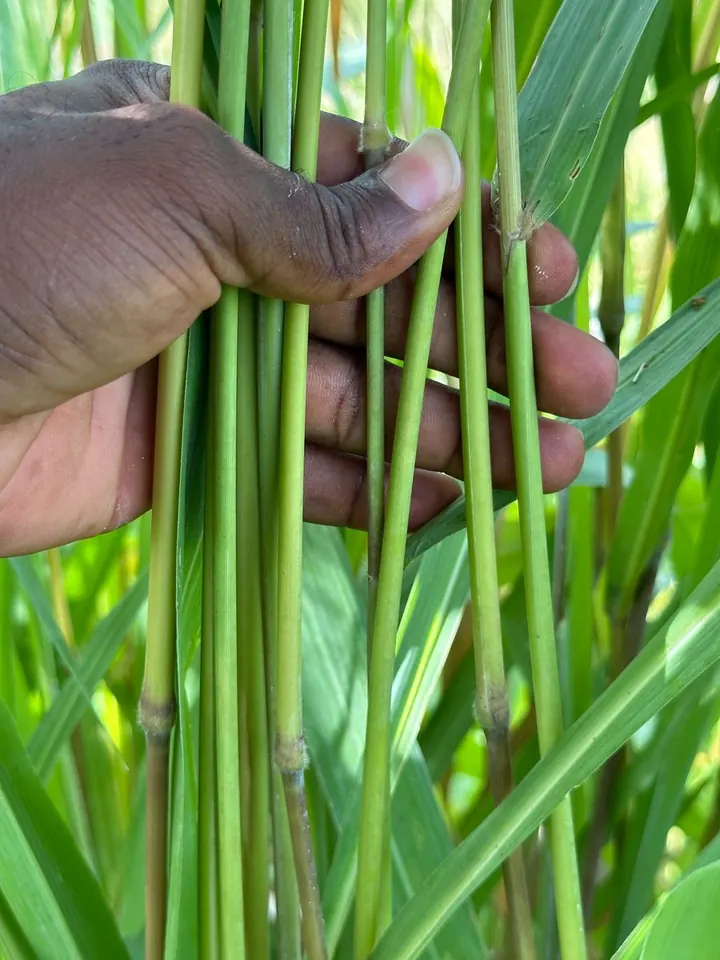
We are now growing basket straw on Baba Tree land in Bolgatanga.
Most Bolga basket straw traditionally comes from wetter parts of southern Ghana. We want to understand the material from the ground up — how it grows, how it can be regenerated, and how much of our future supply we can eventually produce ourselves.
First, every strand is split
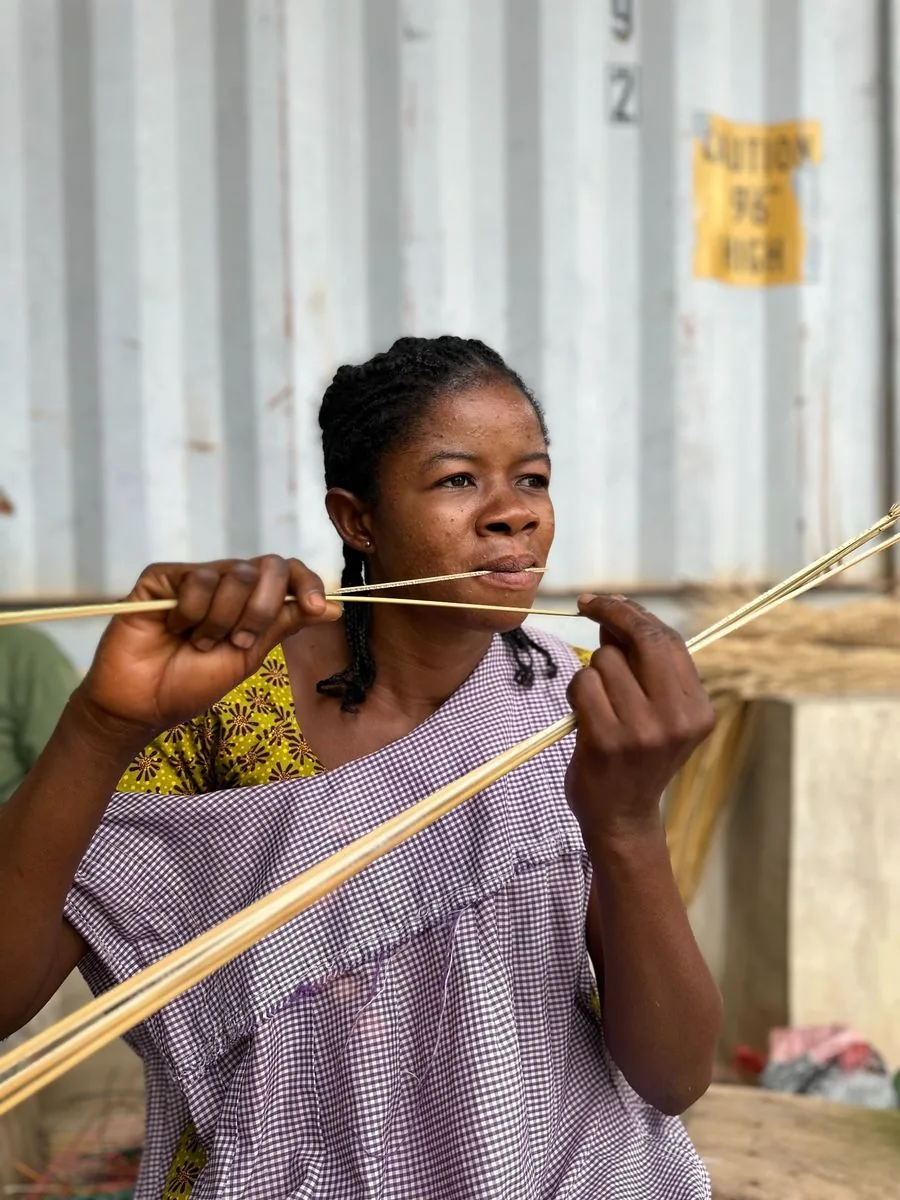
The straw does not arrive ready to weave.
Each piece is split lengthwise by hand.
This is slow, repetitive work. A substantial amount of preparation has already happened before the first row of a basket is woven.
One becomes two
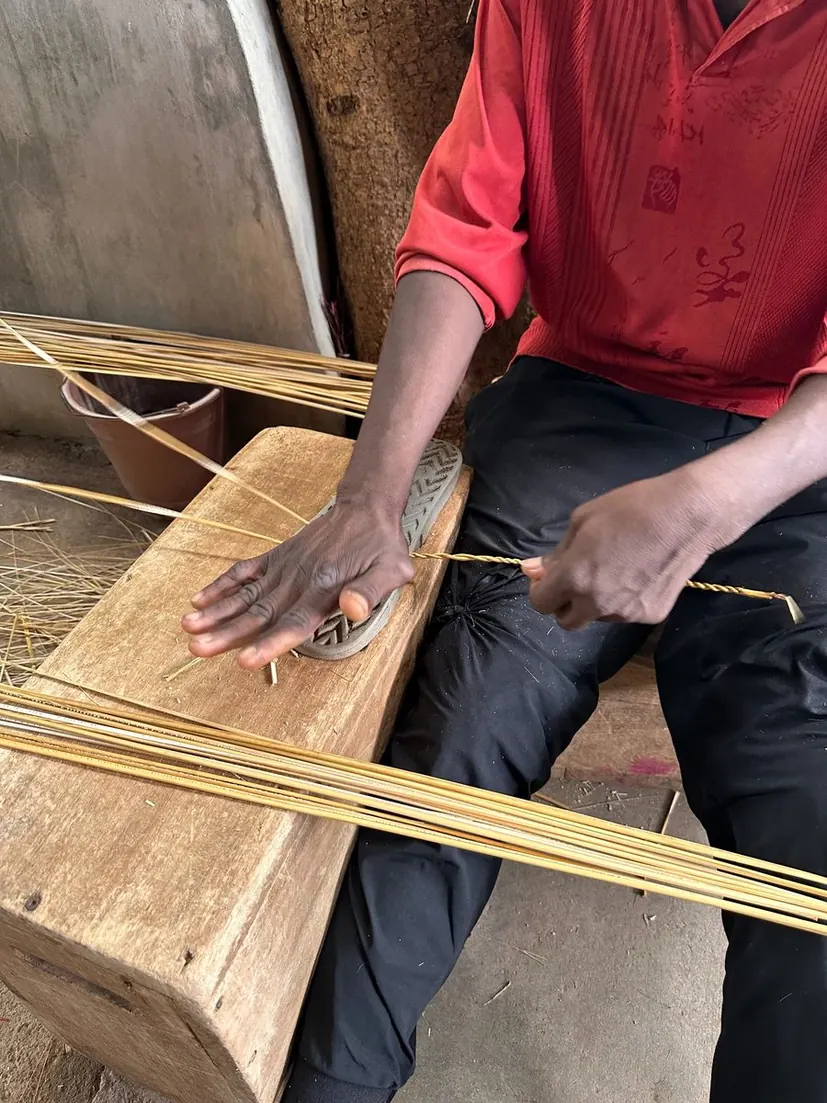
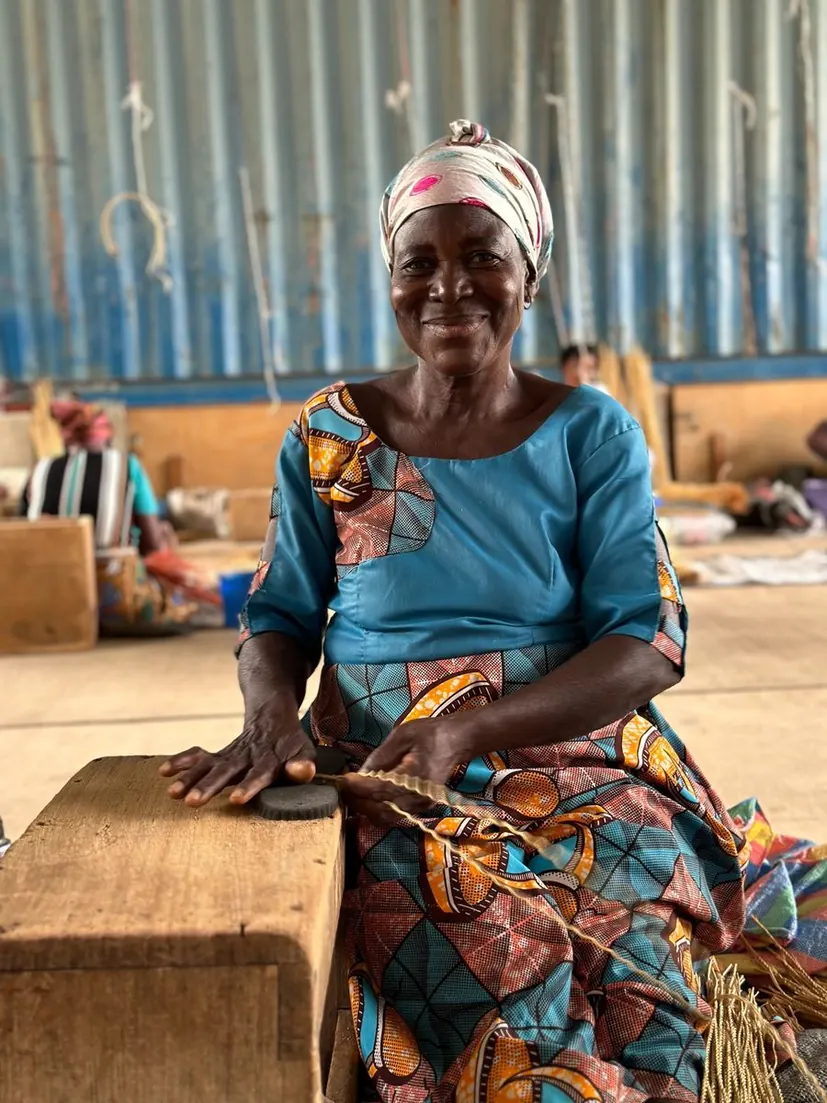
A single piece of straw is divided into two finer strands.
The preparation gives the weaver greater control over the finished surface of the basket.
Then the strands are rolled together
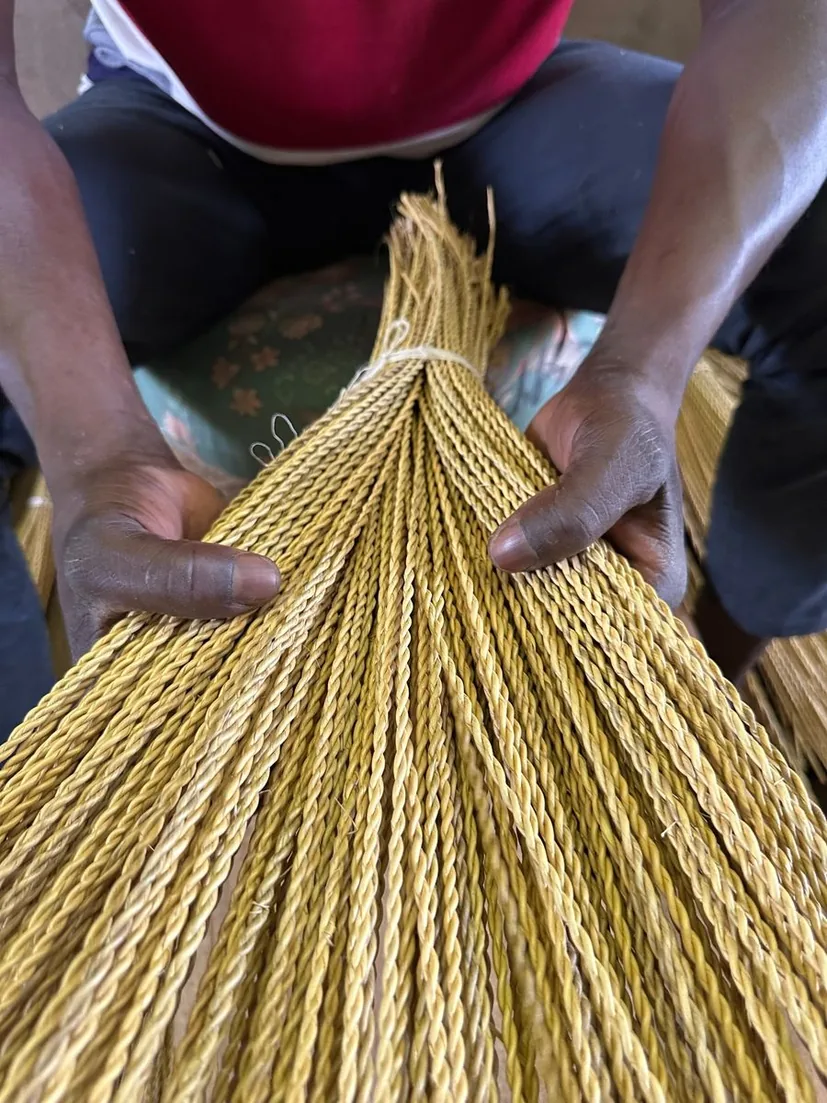
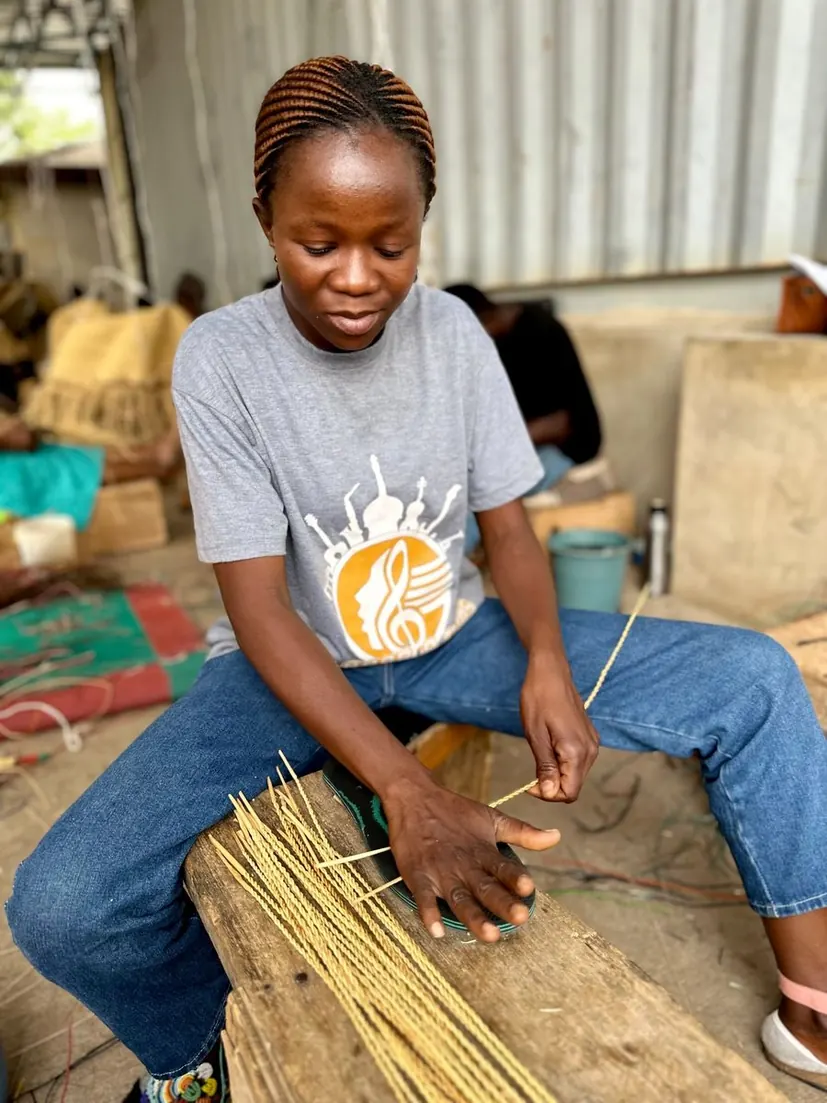
The split strands are rolled together by hand.
This straightens, compresses and prepares the material for the next stage.
The movement looks simple. Doing it consistently for hours is another matter.
Then they are separated again
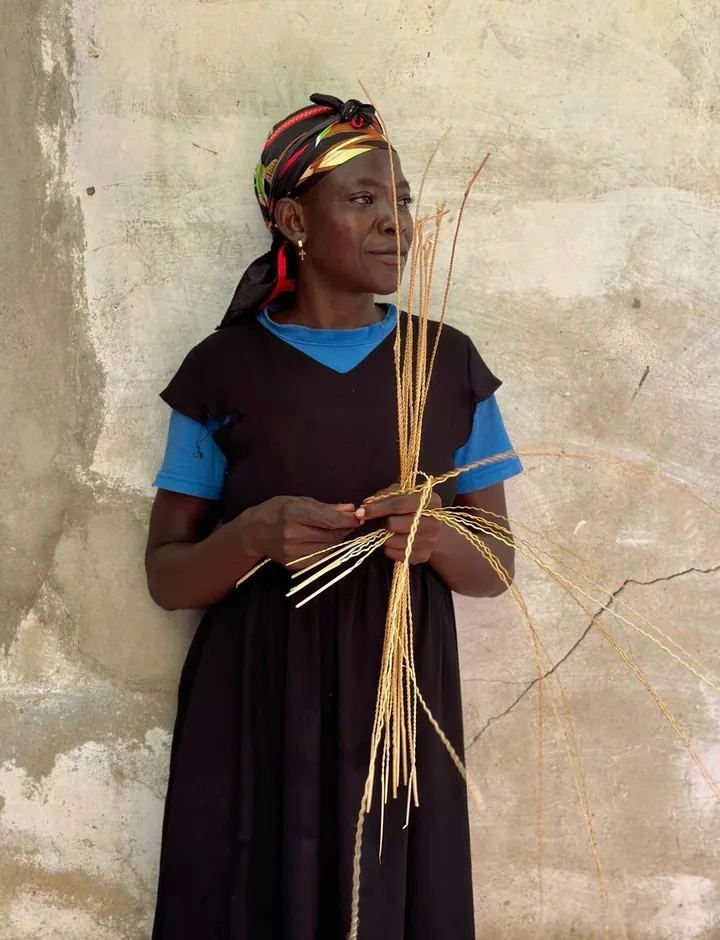
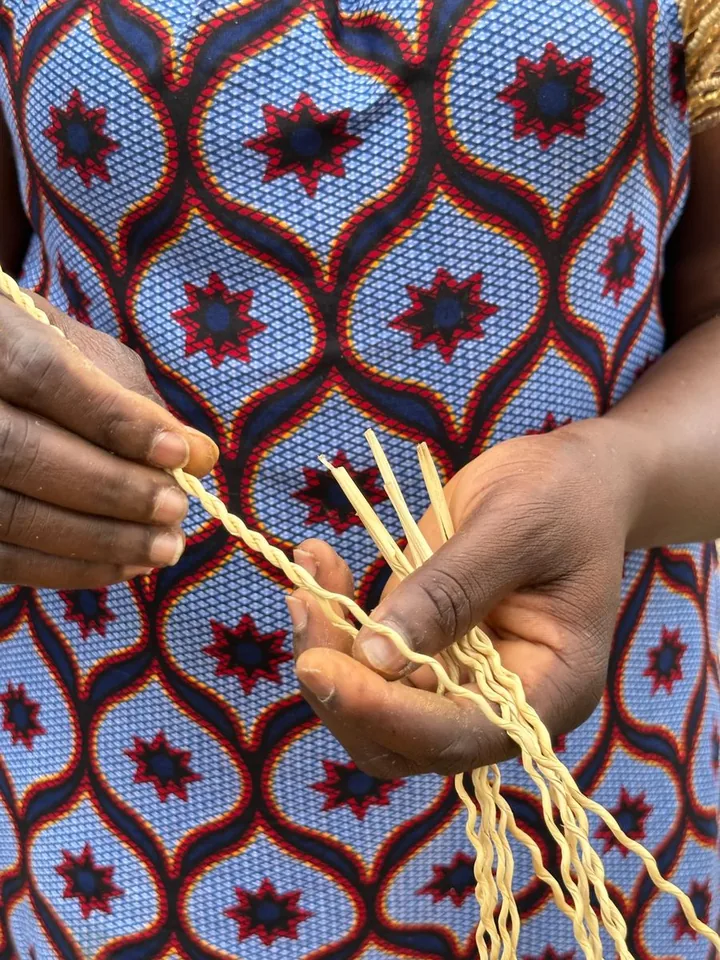
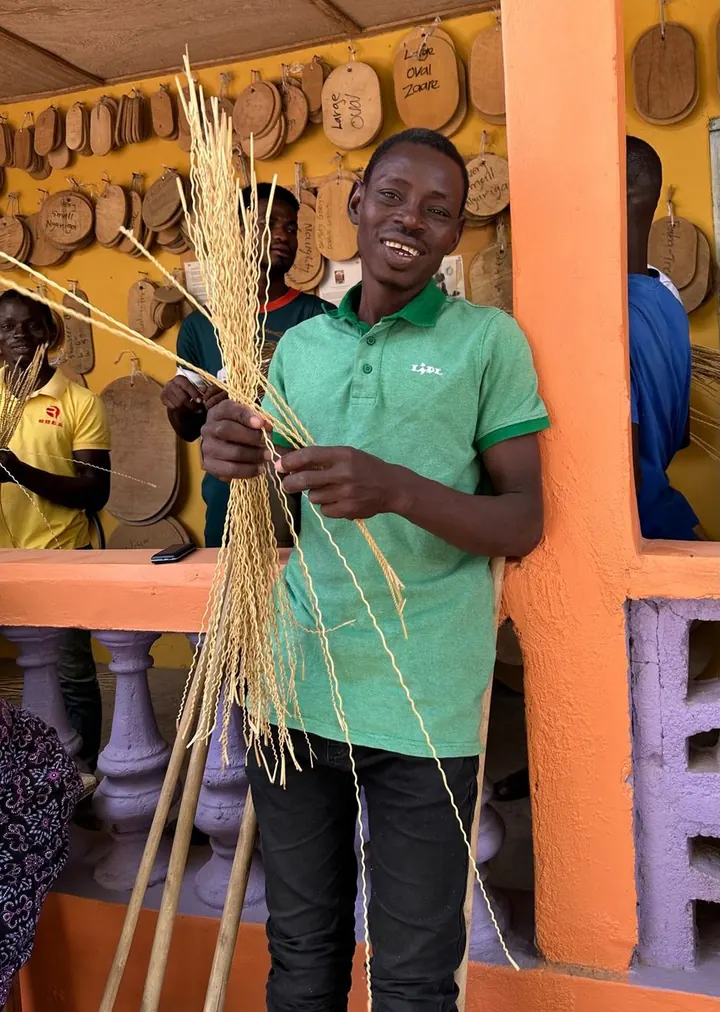
After rolling, the strands are unravelled and separated again. This is sometimes done while weavers roam the compound conversing and catching up with fellow weavers.
Split. Roll. Unravel.
All of this happens before most people would say the basket has even started.
We pay for this work too
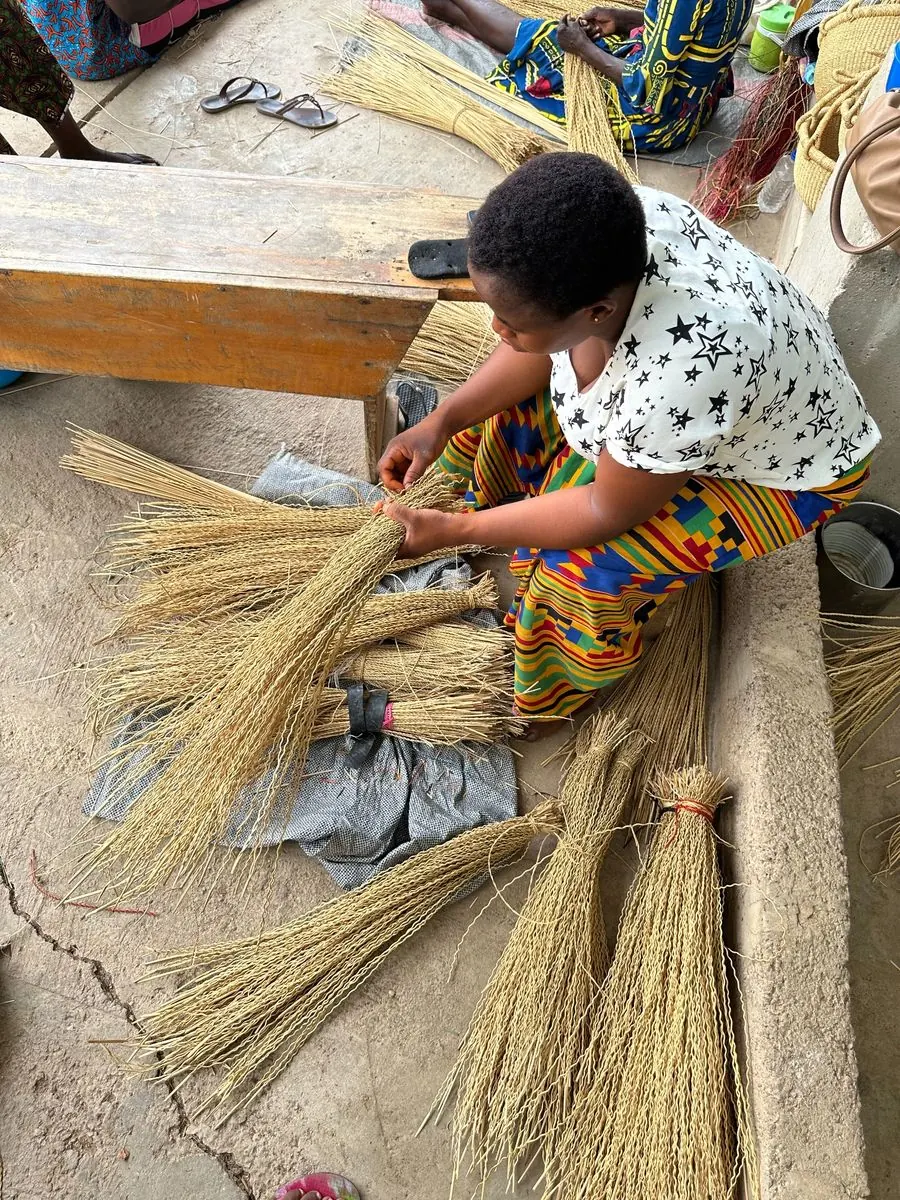
As far as we are aware, The Baba Tree is the only Bolga basket producer that factors the time spent preparing the straw into what the weaver is paid.
Splitting, rolling and unravelling can take hours or days.
We do not regard that time as free.
It is part of making the basket, and it is part of what the weaver is paid for.
Design, measurements and templates
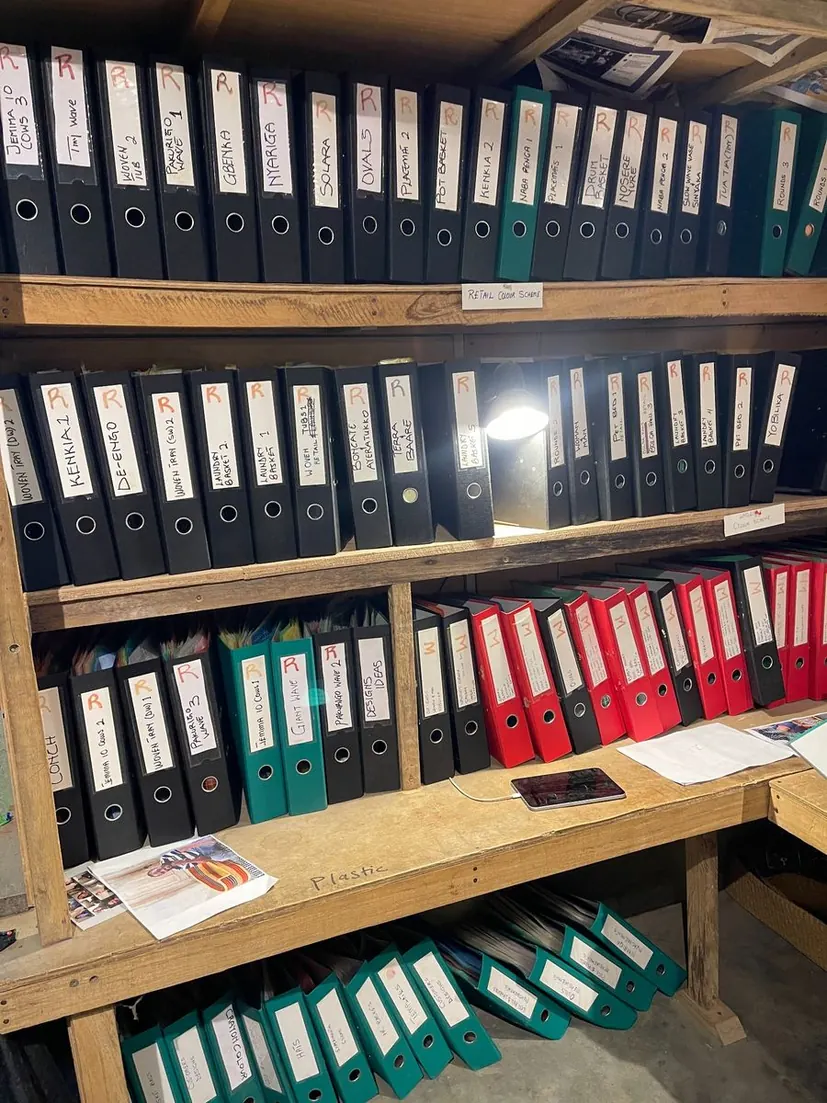
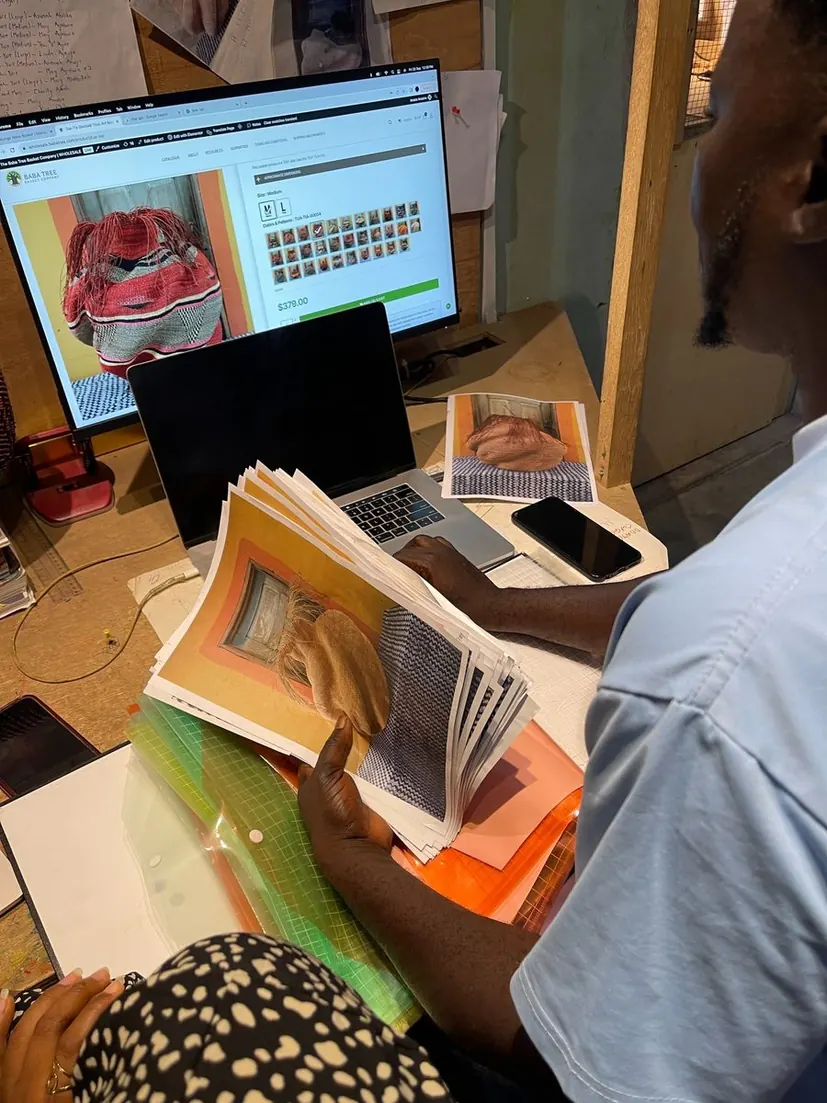
The colour scheme comes from the office
Before weaving begins, the weaver is issued a colour scheme for the basket they are making.
The Baba Tree develops and assigns the colour direction. The weaver then brings that scheme into the finished basket.
No two baskets come out exactly the same.
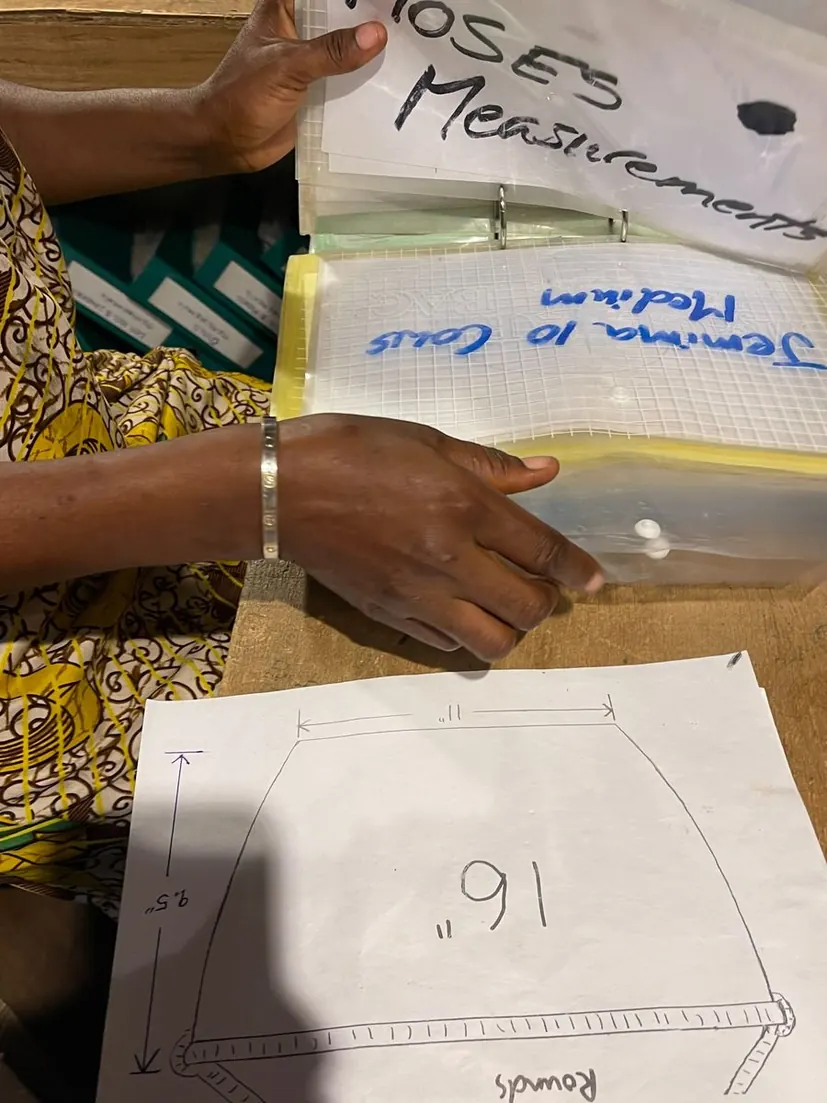
The measurements are issued too
The dimensions for each basket design are set in advance.
Width. Height. Base size. Proportion.
These measurements give the weaver the framework for the design.
Templates keep the base true
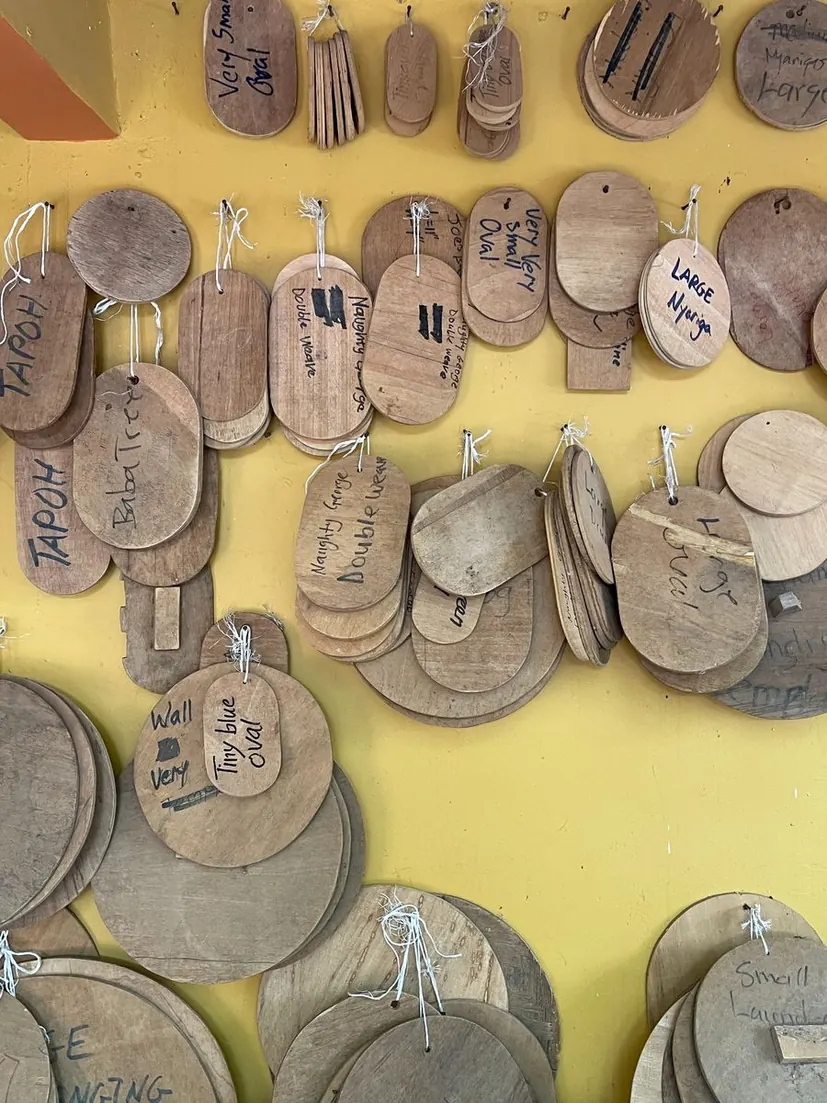
Wooden templates establish the required dimensions of the basket base.
The basket is shaped by hand, but the template keeps the underlying proportions consistent.
Then comes colour
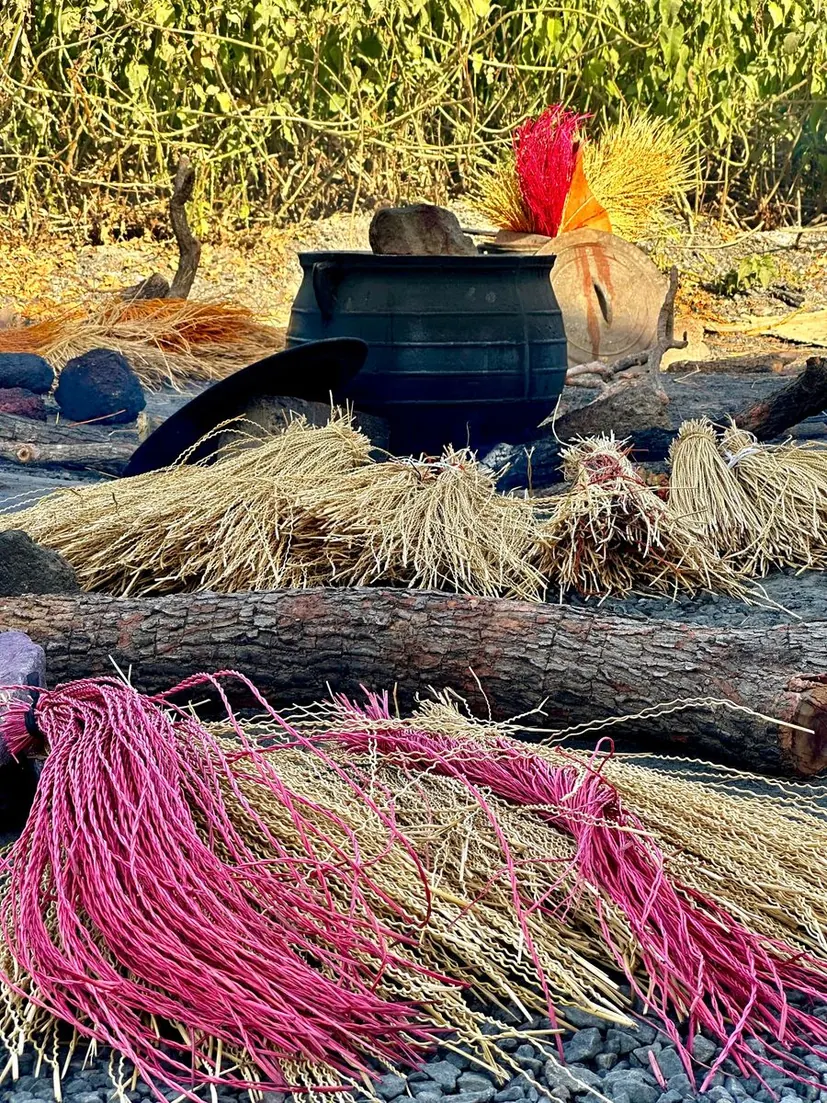
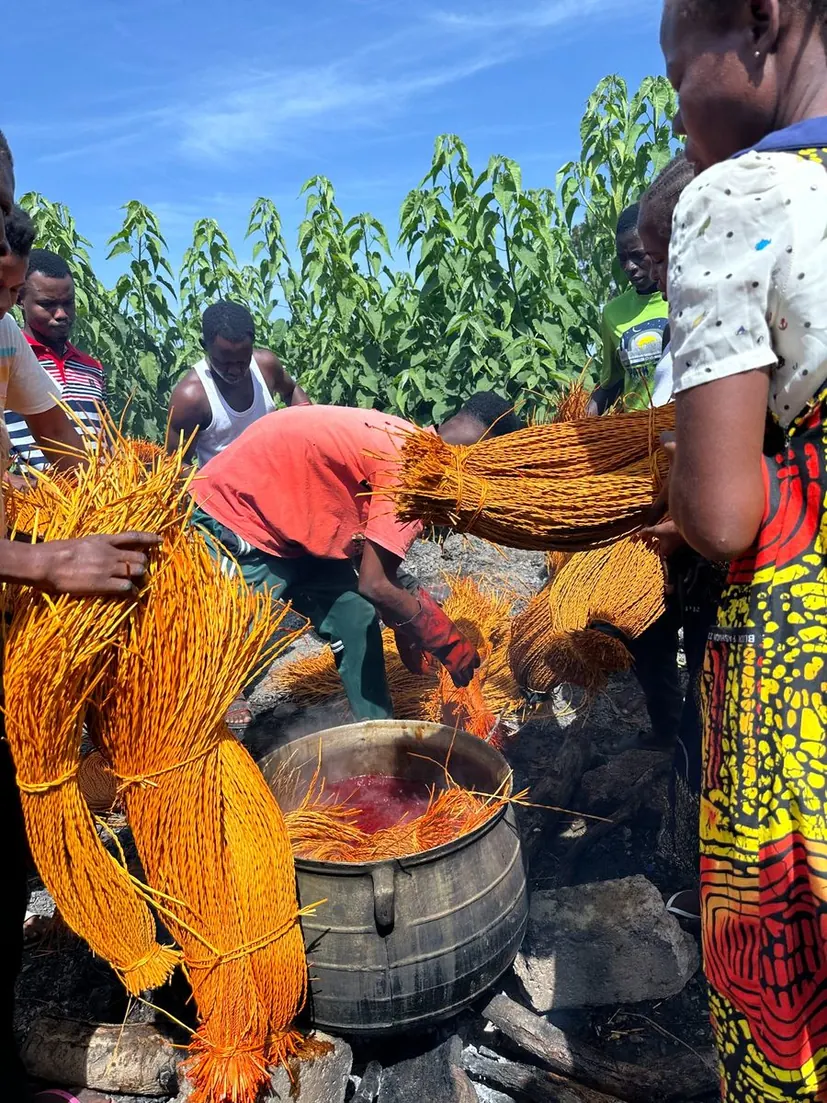
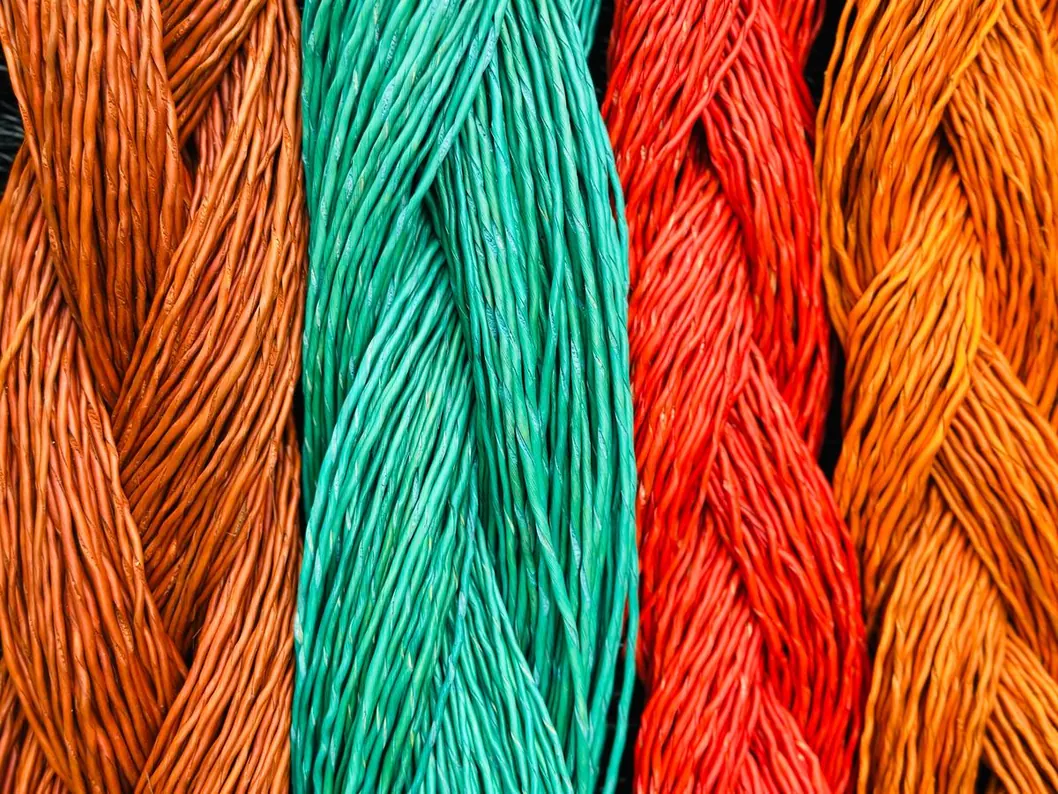
For baskets that are not left natural, the prepared straw is dyed before weaving.
The colour is mixed, heated and prepared in batches in separate pots dedicated to one colour. Pure black is the hardest colour to achieve.
We use chemical dyes. Anyone in this industry that advertises the dyes are ‘natural’, ‘mineral’ or ‘organic’ are most likely ‘fibbing’ – take these claims with a very large grain of salt.
The straw is in the dye
Bundles of prepared straw are immersed in the dye until the colour penetrates the material. Stones are placed on top of the straw to keep the straw submerged in the dye.
Different colours are prepared separately.
The straw used in this industry is very carbonaceous – it has a tough shell. It must be dyed in boiling water for the dye to penetrate into the straw as much as possible.
Then it dries
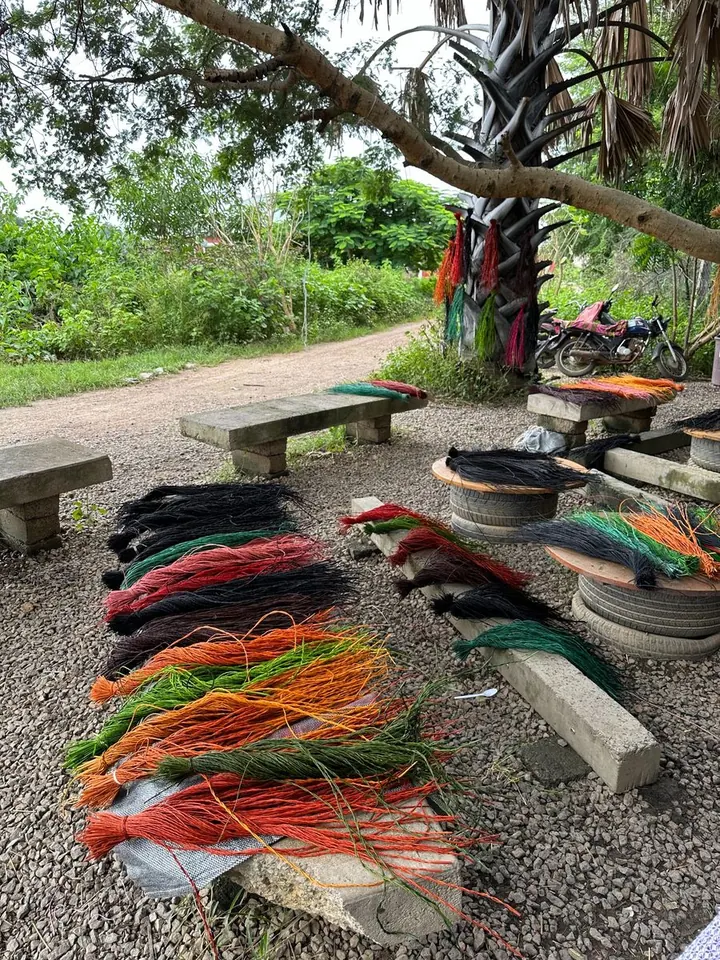
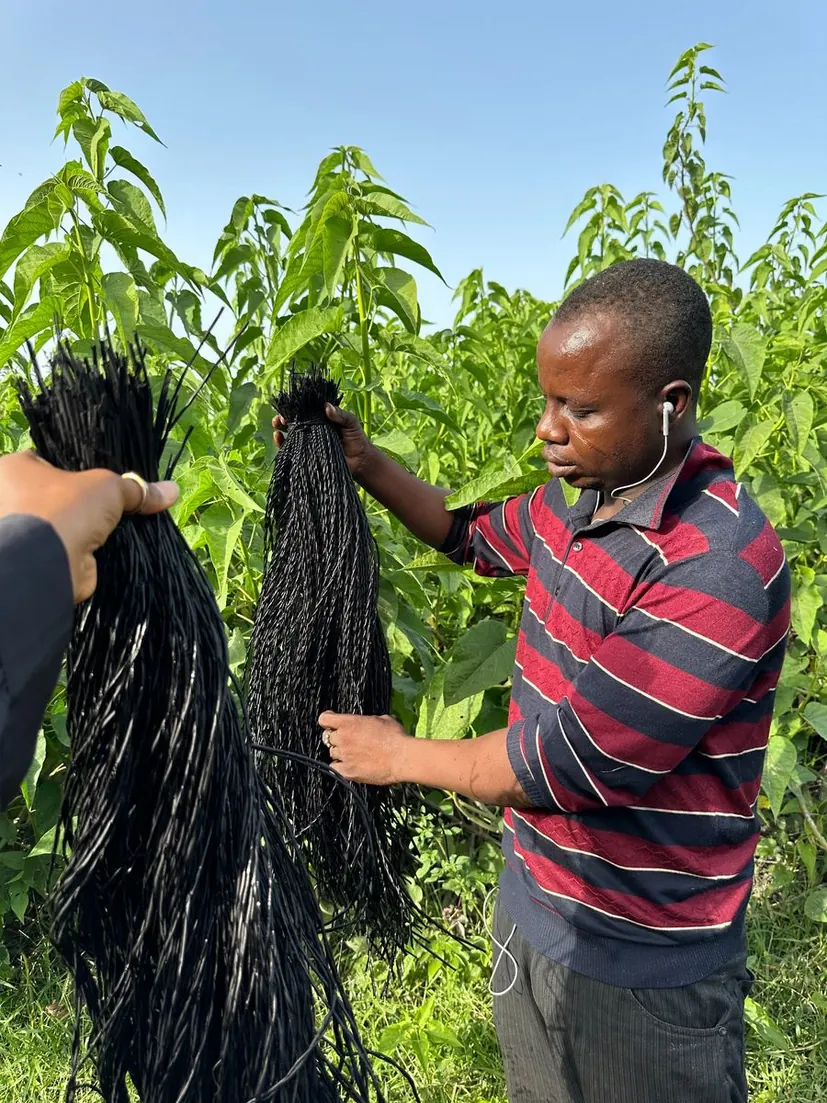
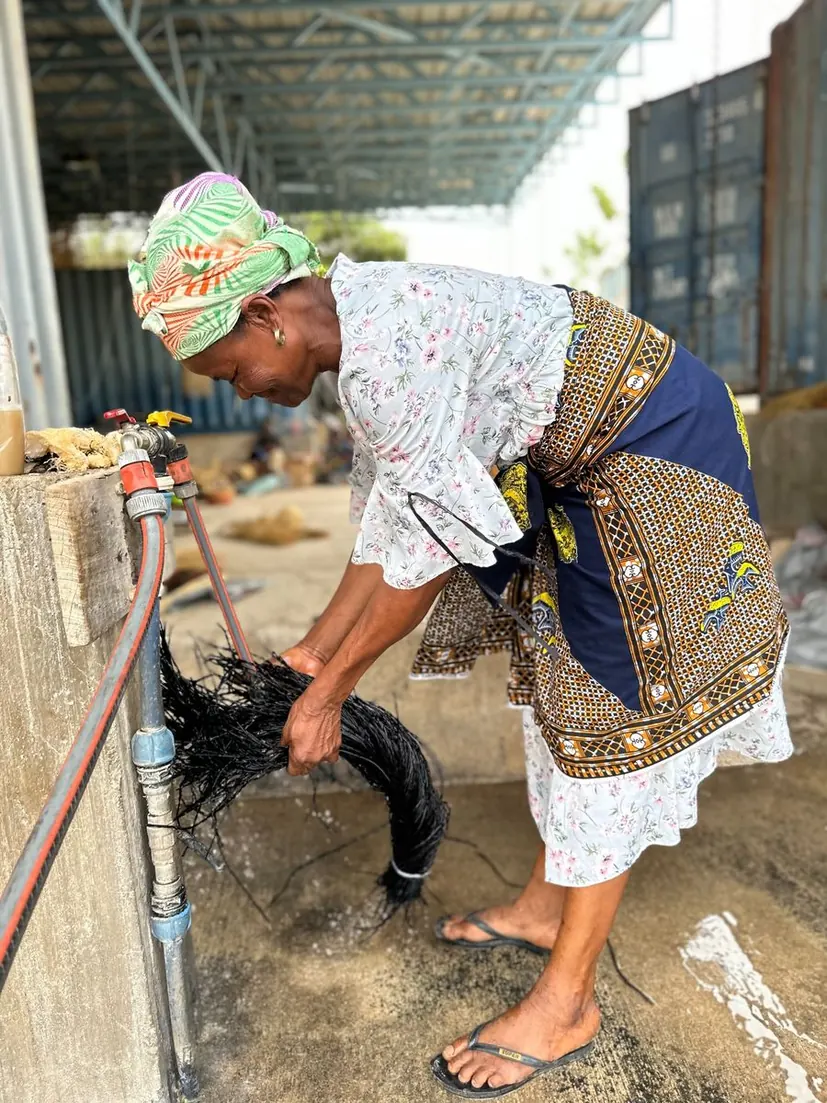
After dyeing, the straw is removed, rinsed with water, separated and left to dry.
Only when it is ready can the weaving begin.
By now, a considerable amount of work has happened.
There is still no basket.
Natural straw is soaked and dried
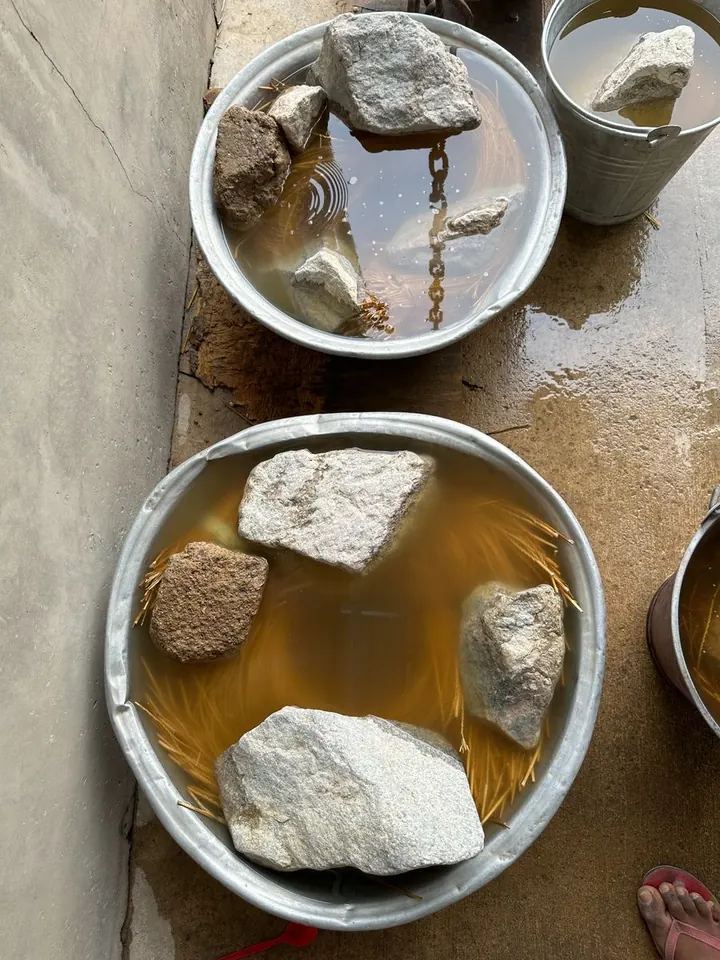
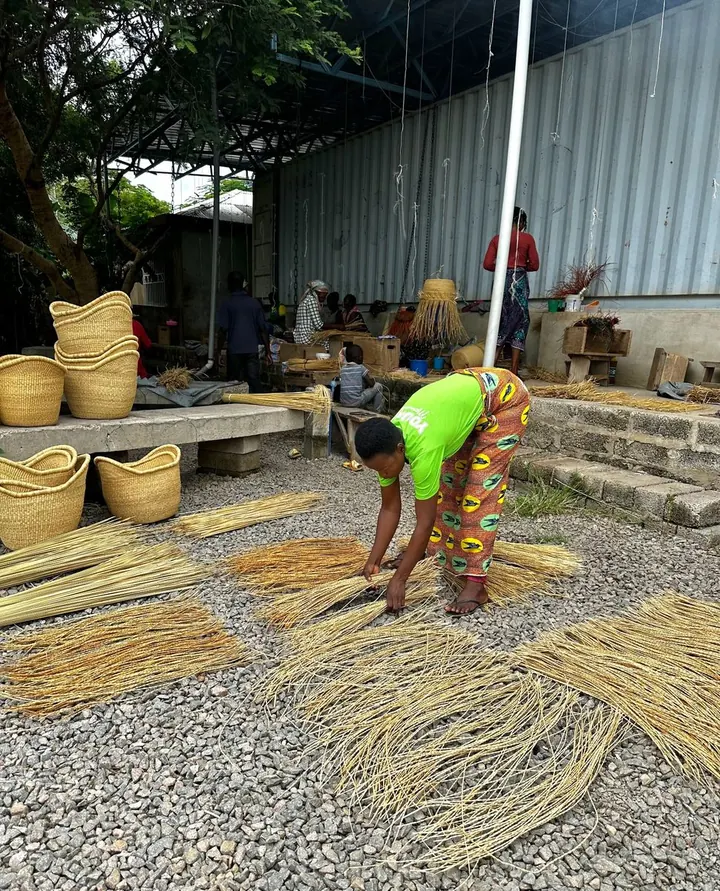
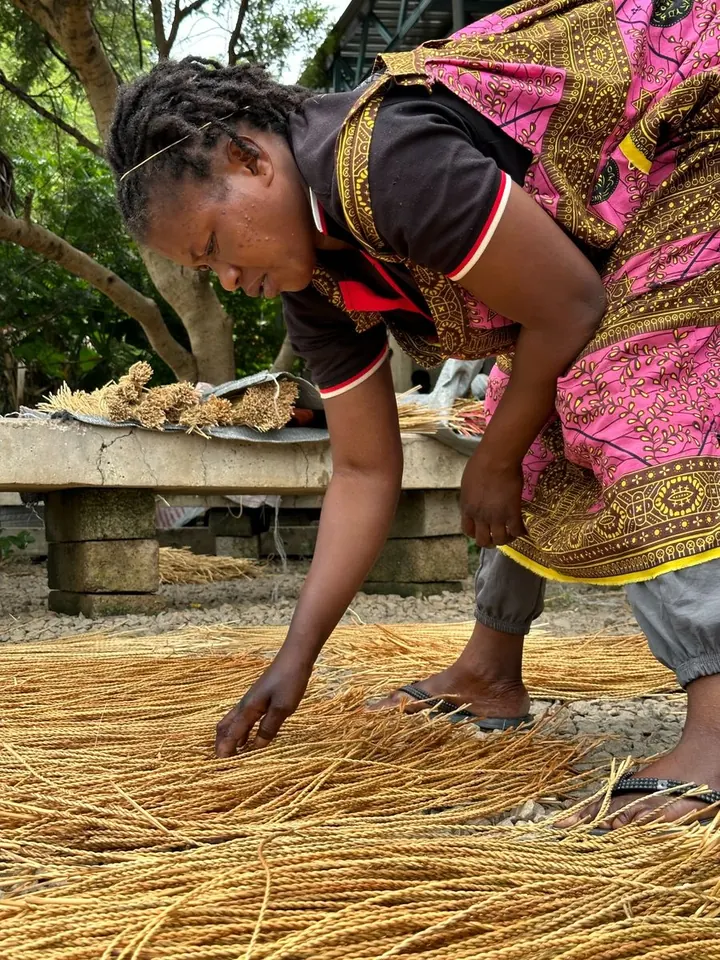
For those that are weaving baskets out of natural straw or their issued colour pattern has natural straw in the design, the straw is soaked overnight in containers in order to remove dust and dirt.
The straw is then left out to dry.
Weaving
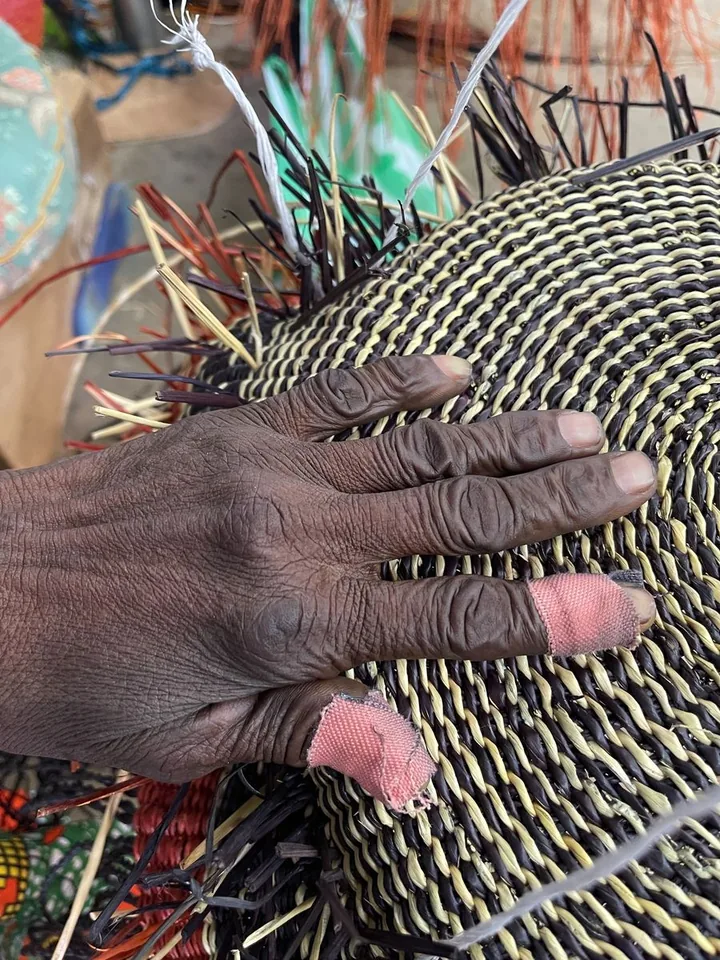
Now the basket begins
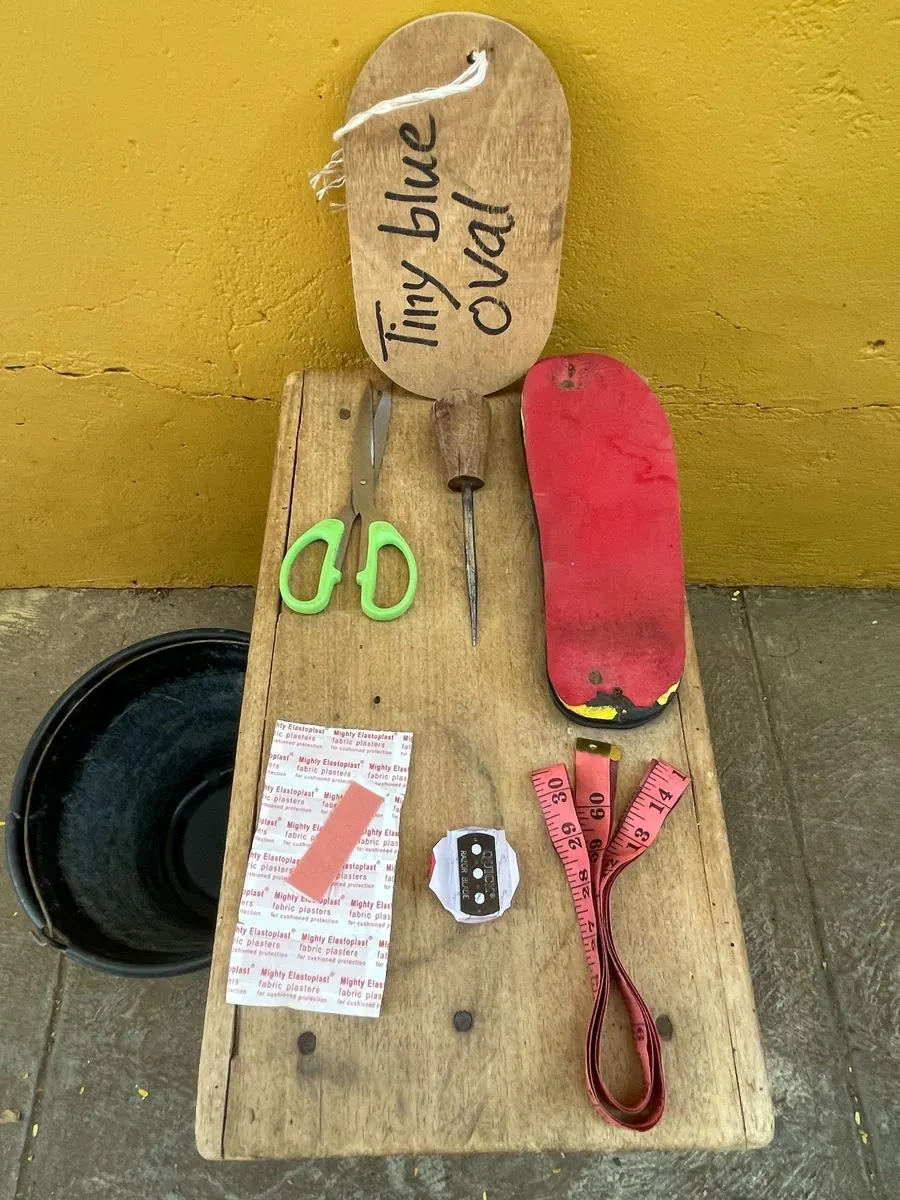
Here are the tools that our weavers use - we provide all of the tools for our weavers except for their spikes and a bucket.
- Blades for cutting straw
- Measuring tapes
- Plasters (Band-aids) to prevent blistering
- Scissors for cutting straw
- All benches and support - all made in house.
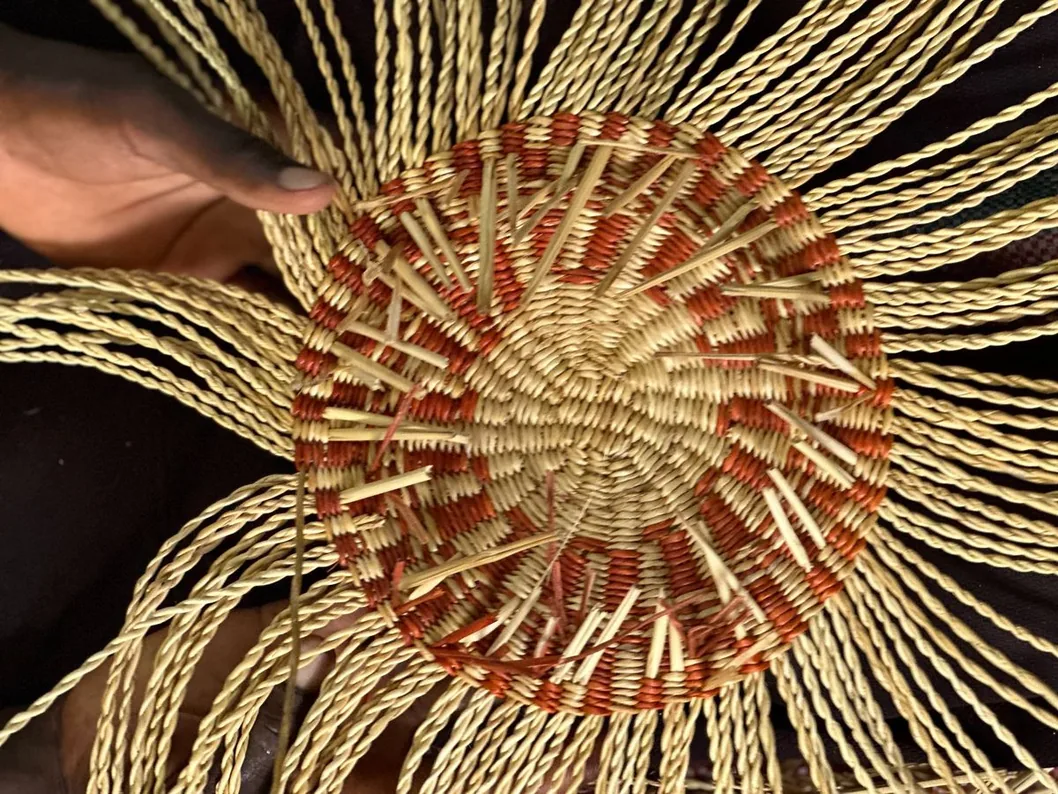
The weaving starts at the base.
The centre is established first, then the basket begins expanding outward.
The form begins to grow
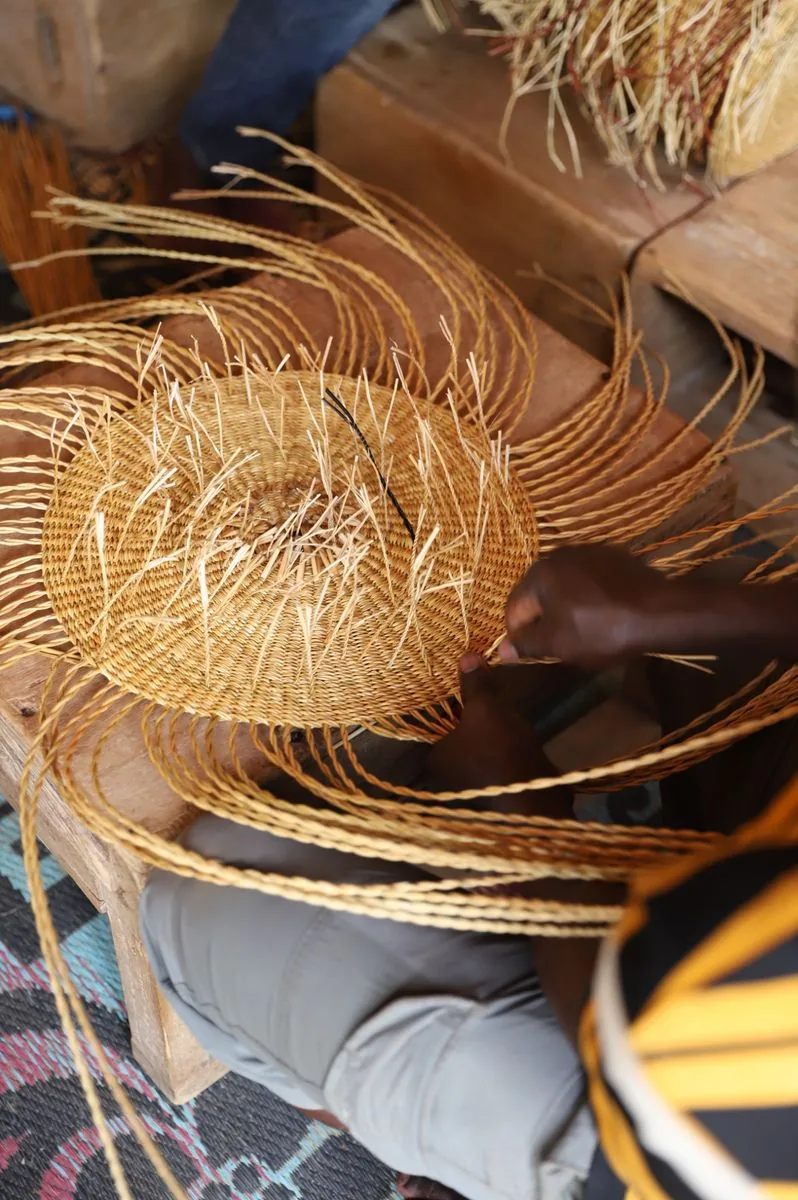
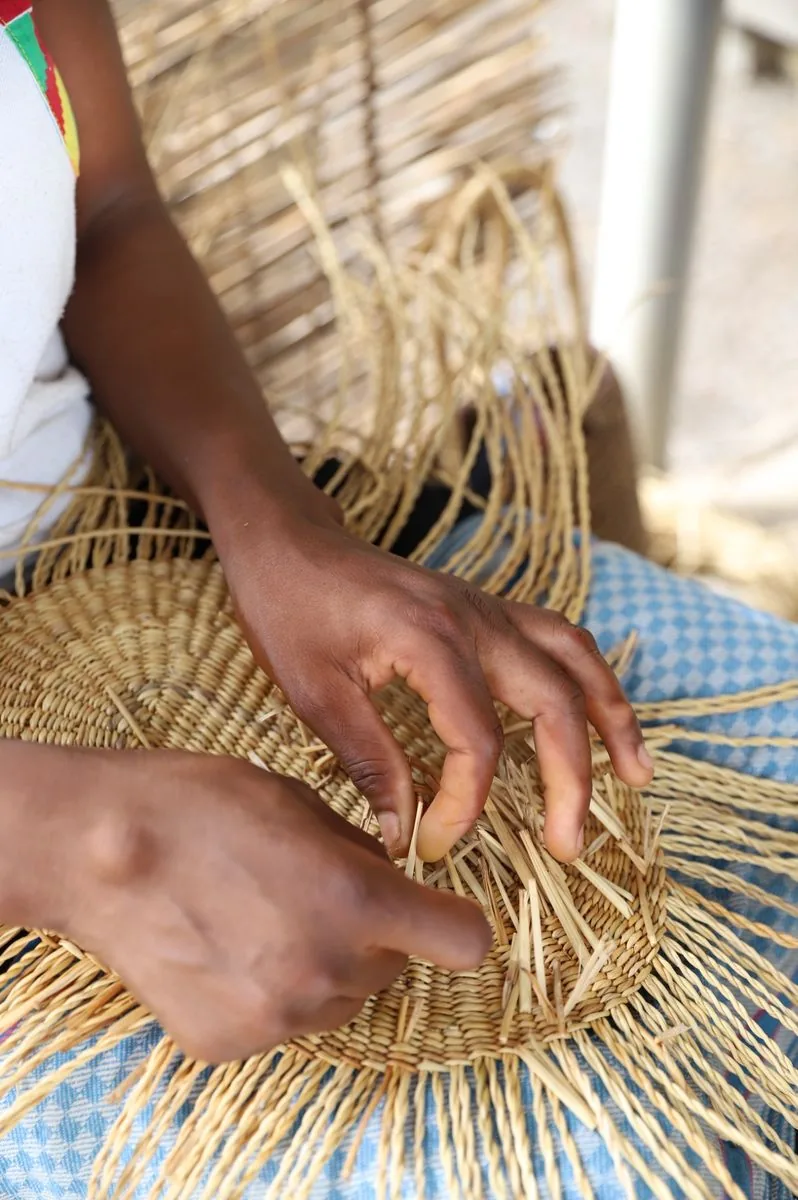
Row by row, the base expands.
The weaver checks the dimensions against the design as the shape develops.
From flat to three-dimensional
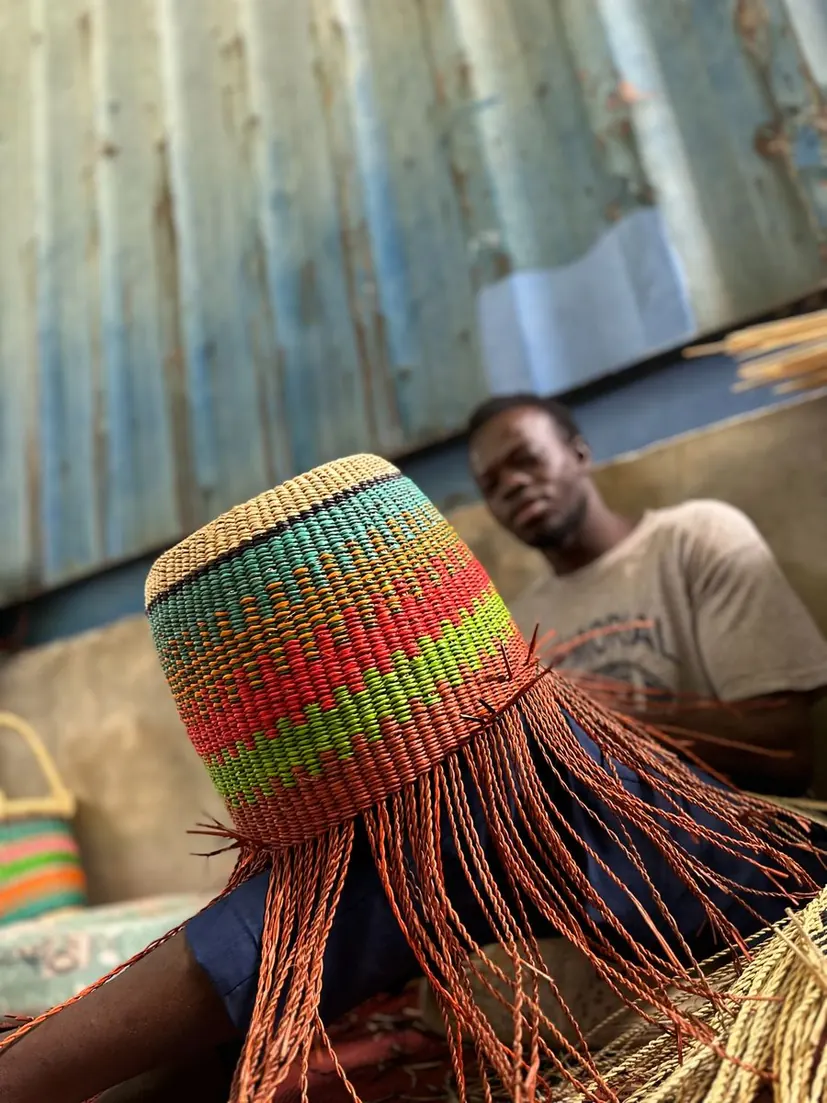
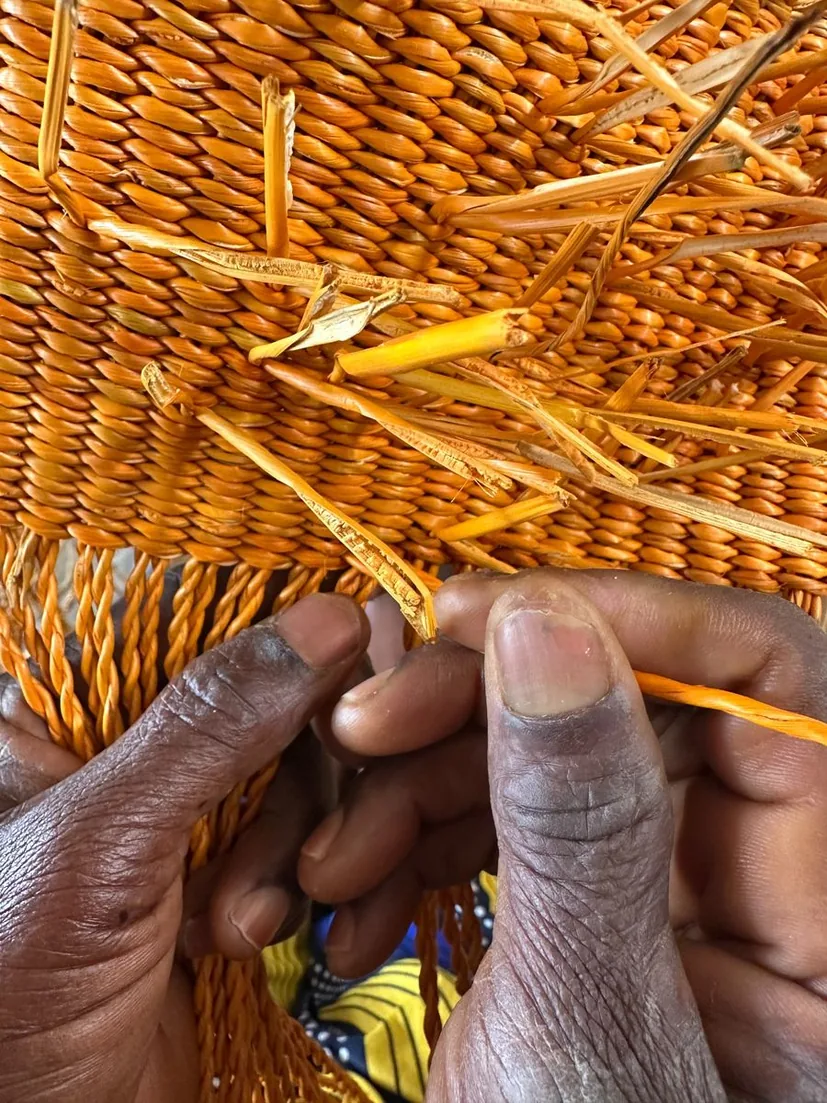
Once the base is established, the basket begins to rise.
A flat woven base becomes a vessel.
Halfway up
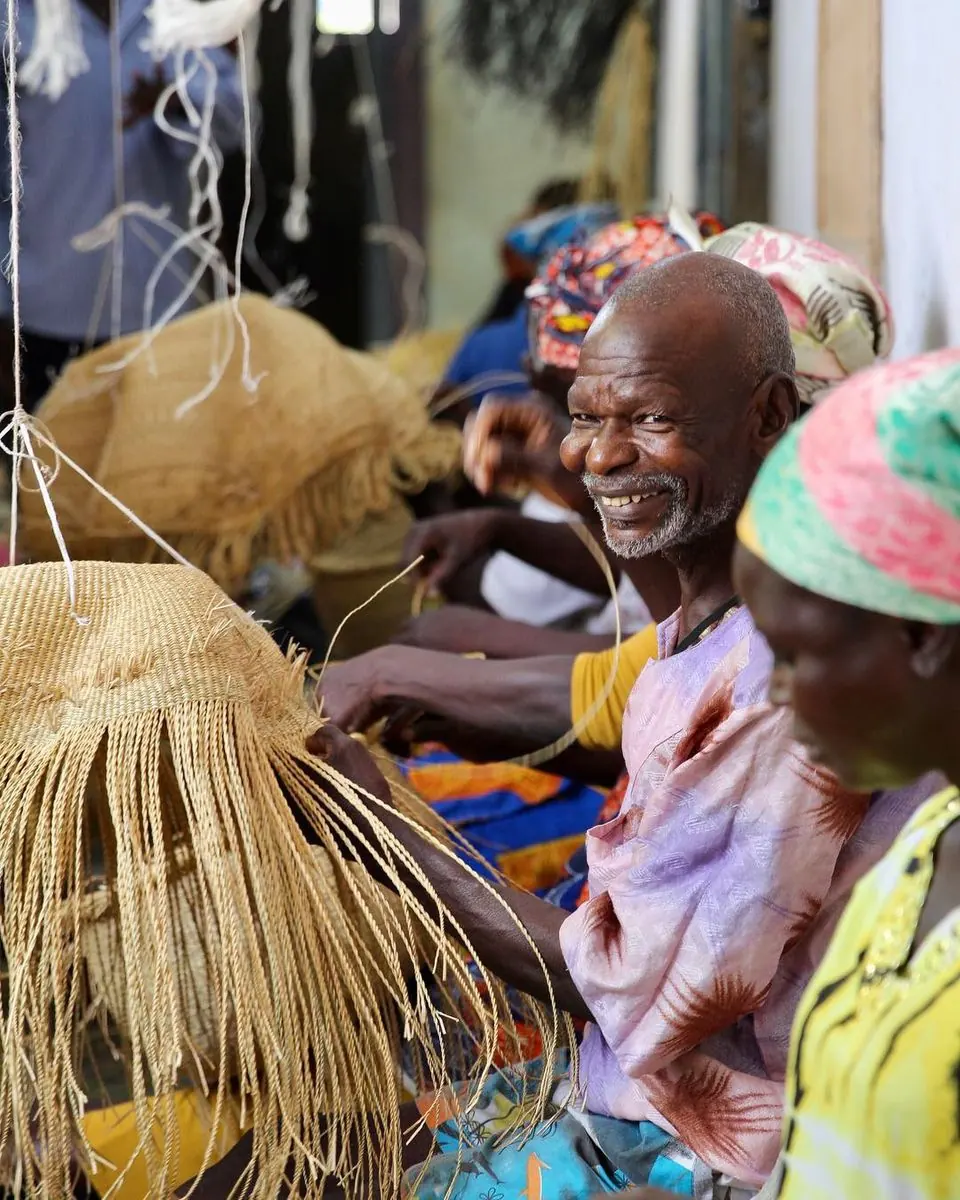
At this stage the weaver is managing several things at once:
Shape.
Tension.
Proportion.
Pattern.
Colour.
There is no mould holding the basket together.
The structure comes from the weave itself.
Then the basket is turned upside down
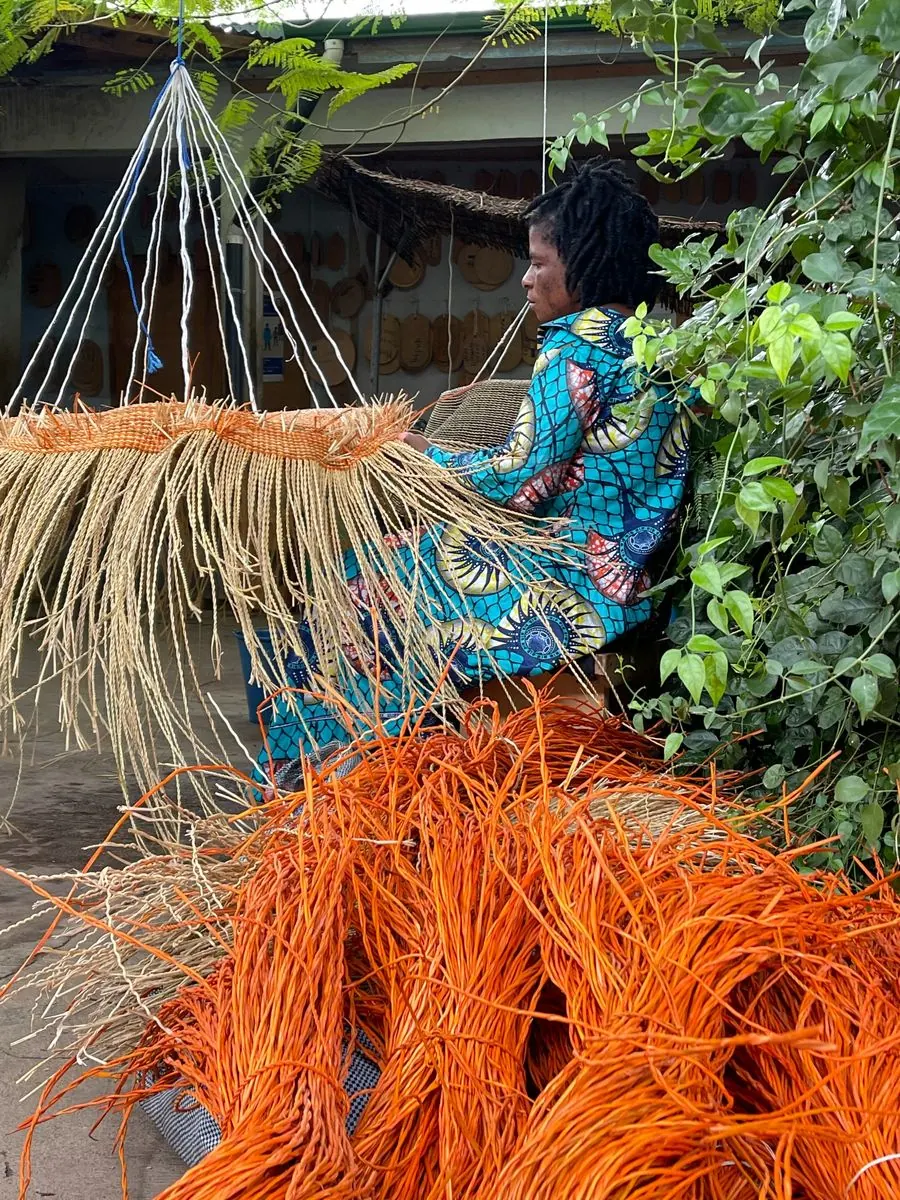
Partway through the process, weavers hang the basket from a string and continue weaving with the basket upside down.
It looks peculiar the first time you see it.
For the weaver, it is simply a practical way to continue controlling the form as the basket grows.
The basket grows downward
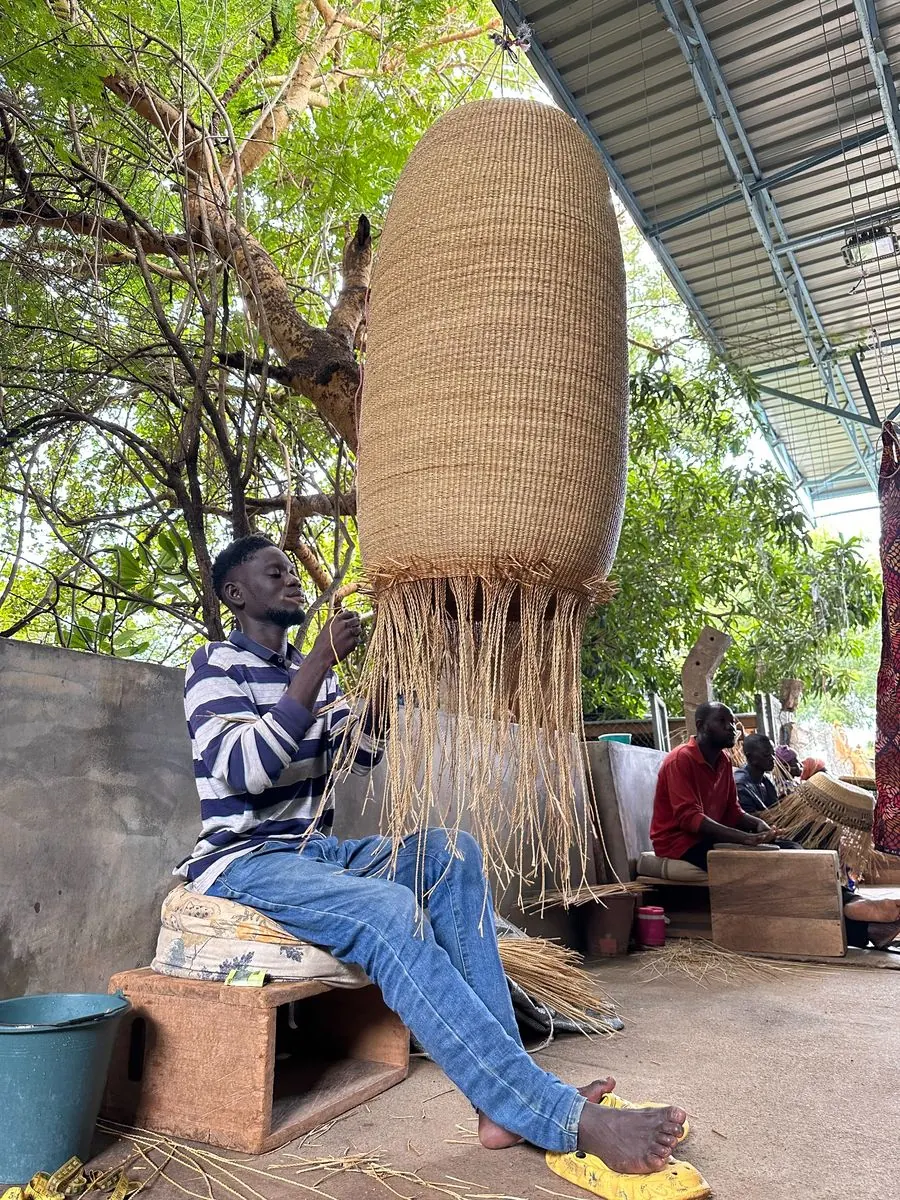
Suspended above the ground, the basket is easier to rotate and work around.
The weaver continues building the form row by row until the body is complete.
Keeping the straw malleable
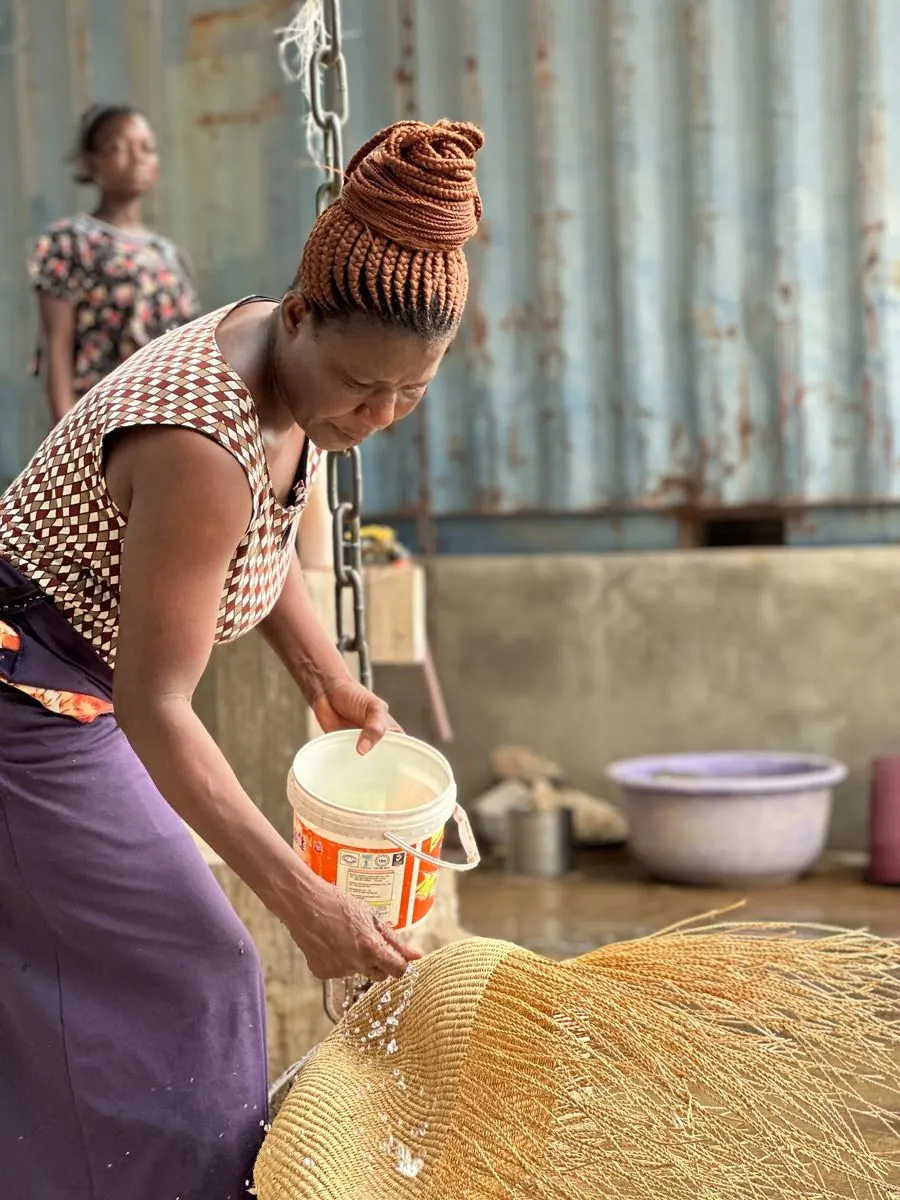
The straw must remain damp for malleability. Weavers are constantly flicking water from their bucket on the basket or will, at times, soak the basket under the tap.
Finishing
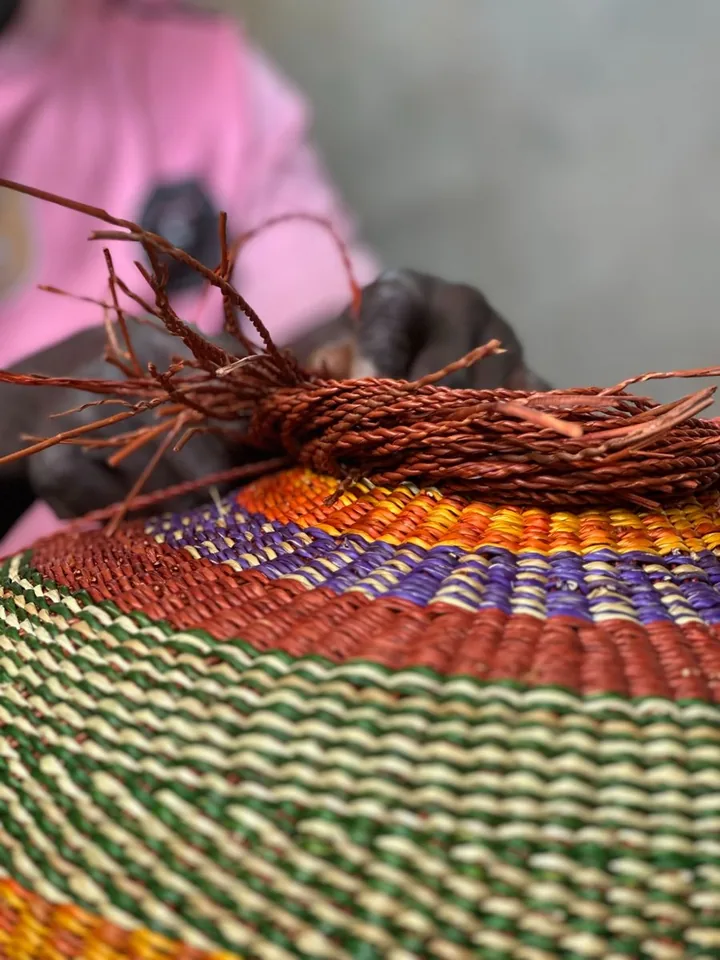
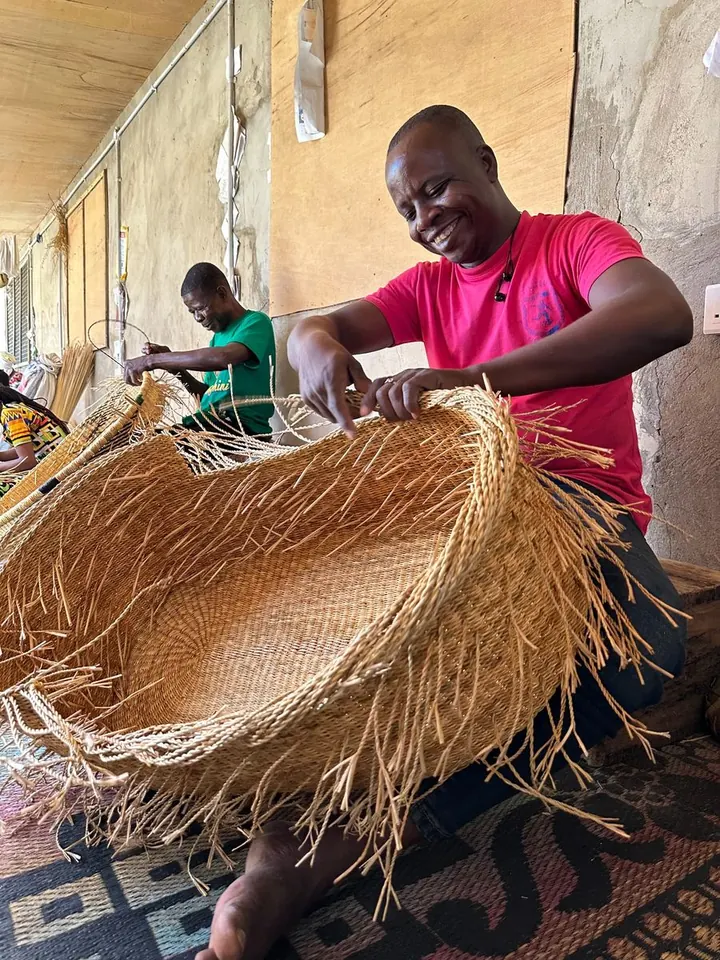
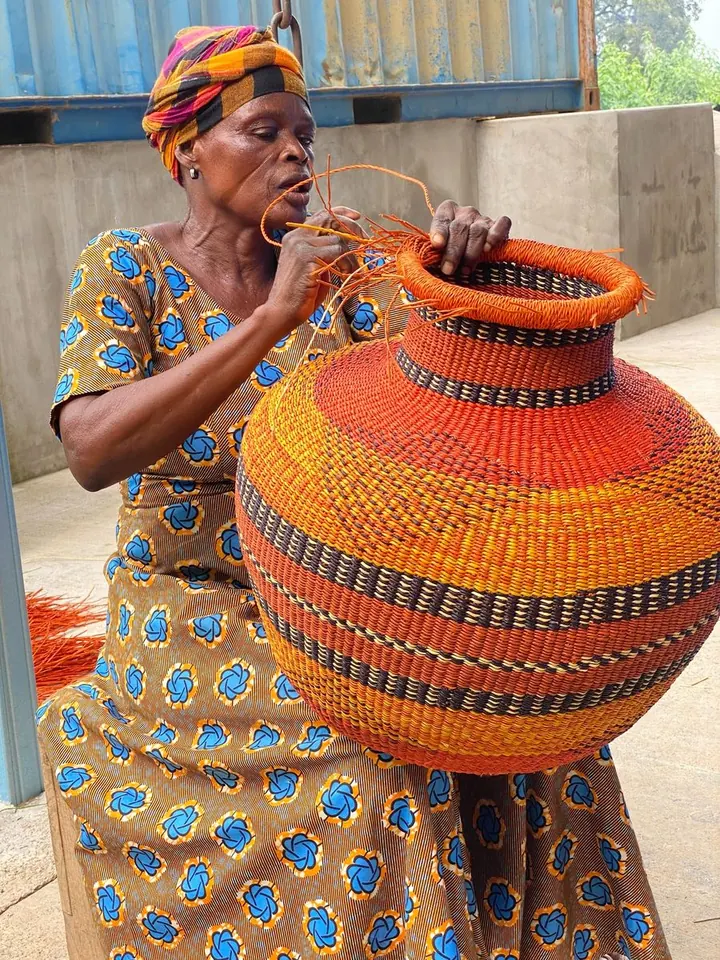
The final rows
The end of the weave has to be resolved carefully.
Depending on the design, that may mean a rim, coil, edge or another form of finishing.
Then comes the trimming
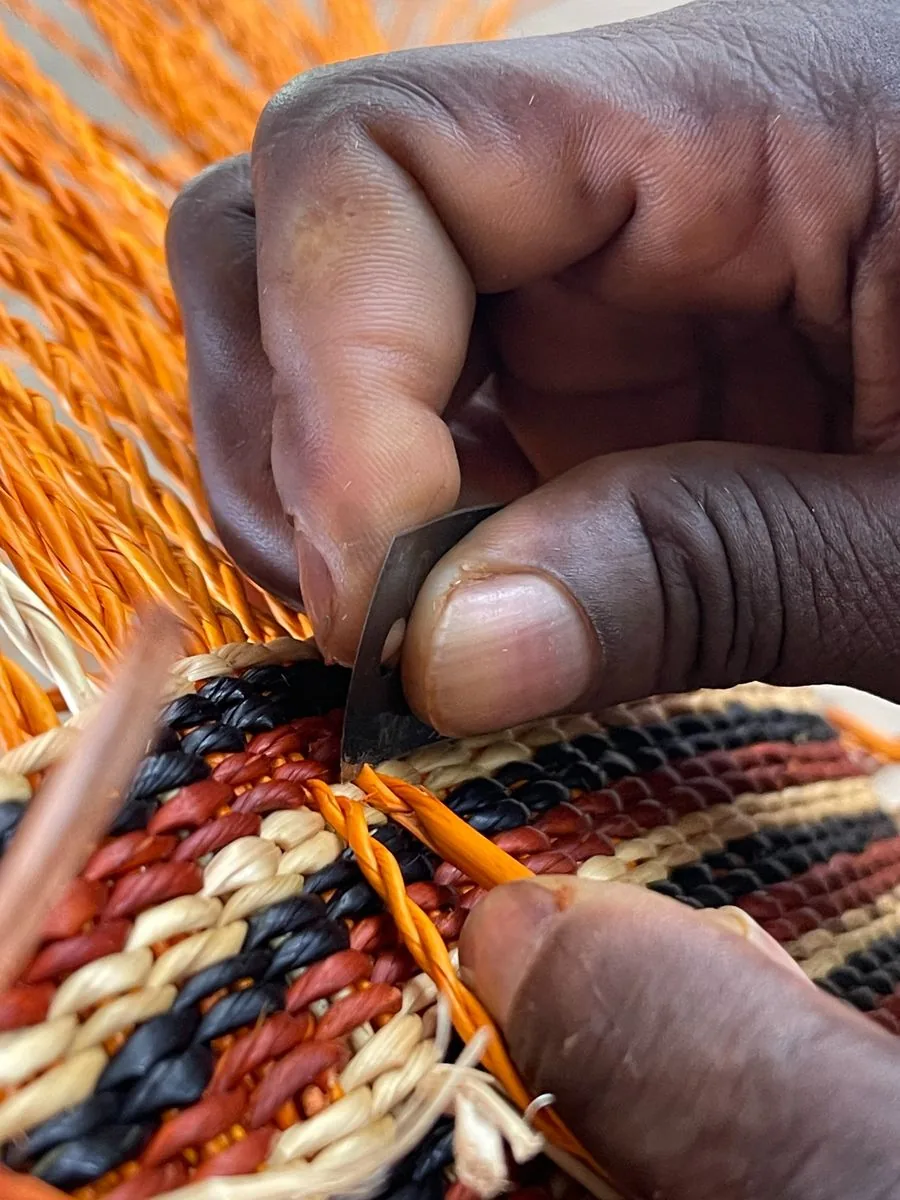
Loose fibres and excess straw are cut away.
The surface is cleaned.
Edges are checked.
The basket begins to look finished.
Handles
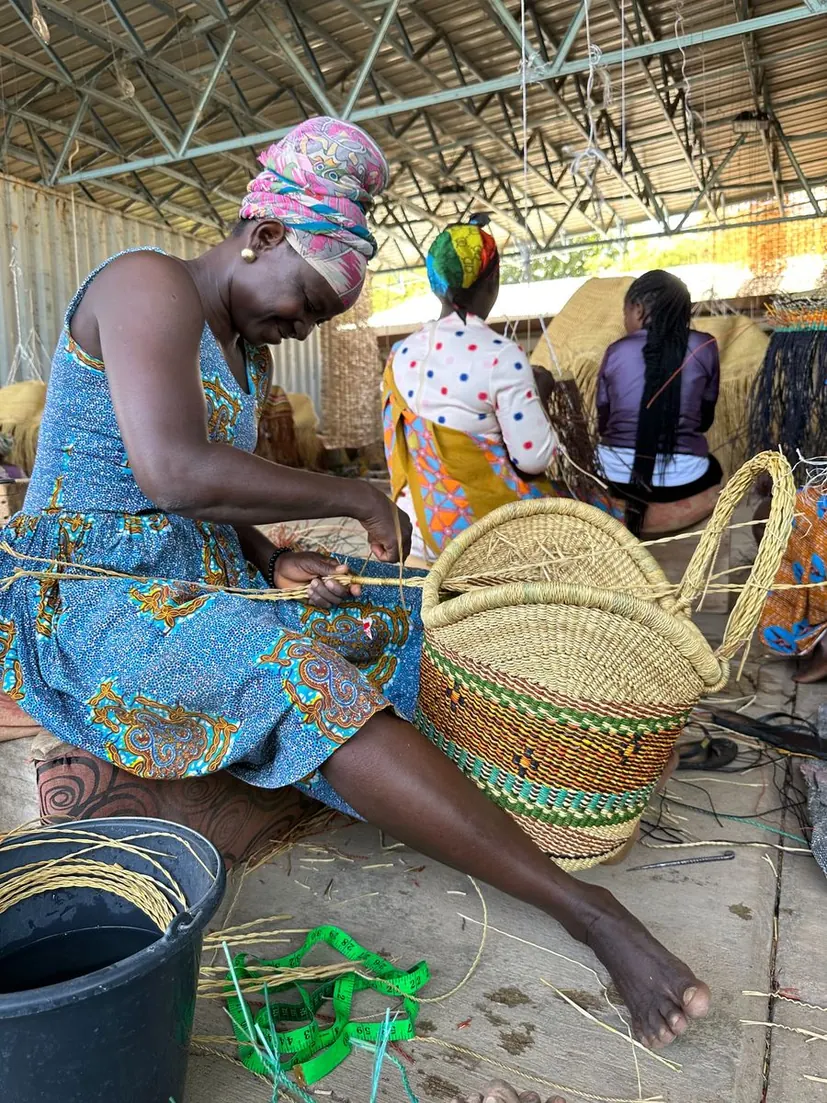
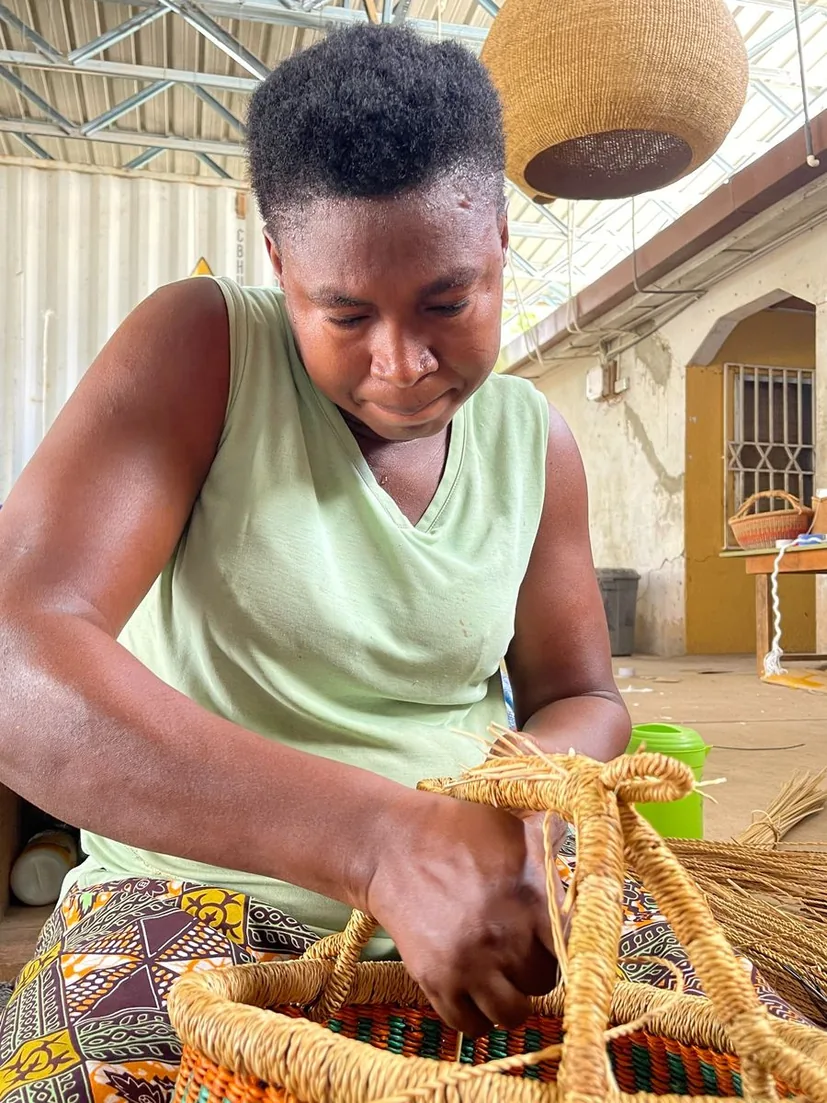
Some of our baskets require handles. Our Round Market Basket has one handle spanning the diameter of the basket.
This is the hardest handle to master.
This handle will be tested for strength 3 times from the time it is finished to the time it sent to our customers.
All of our other baskets that require handles are two handled baskets. The handles must be strong, the proper height, both handles must be the same height and each handle must be evenly spaced.
During our buying / quality control process, baskets are often rejected for poor work on the handles and give to our in house handle specialist to redo / repair.
The last centimetres matter
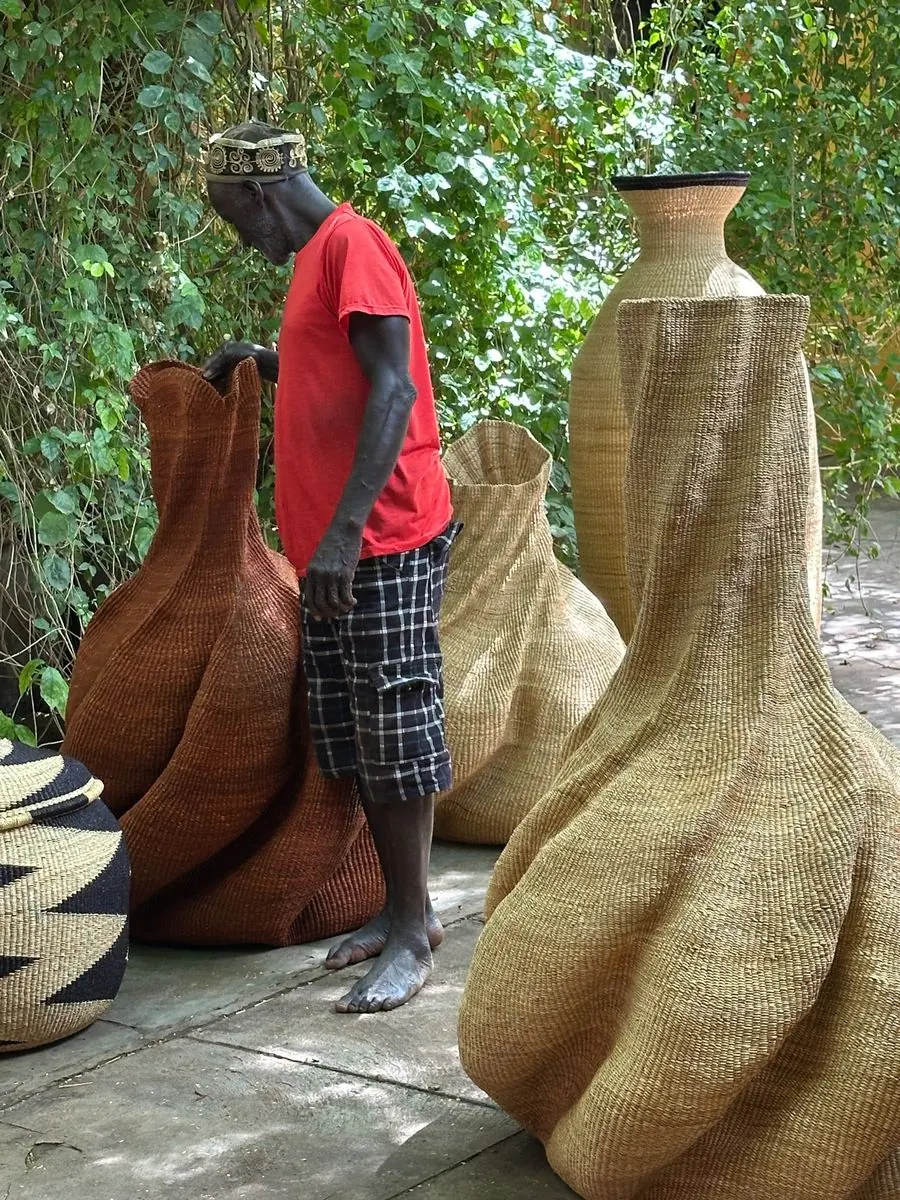
Loose ends are resolved.
The shape is checked.
The basket is cleaned and prepared for the next stage.
Leatherwork
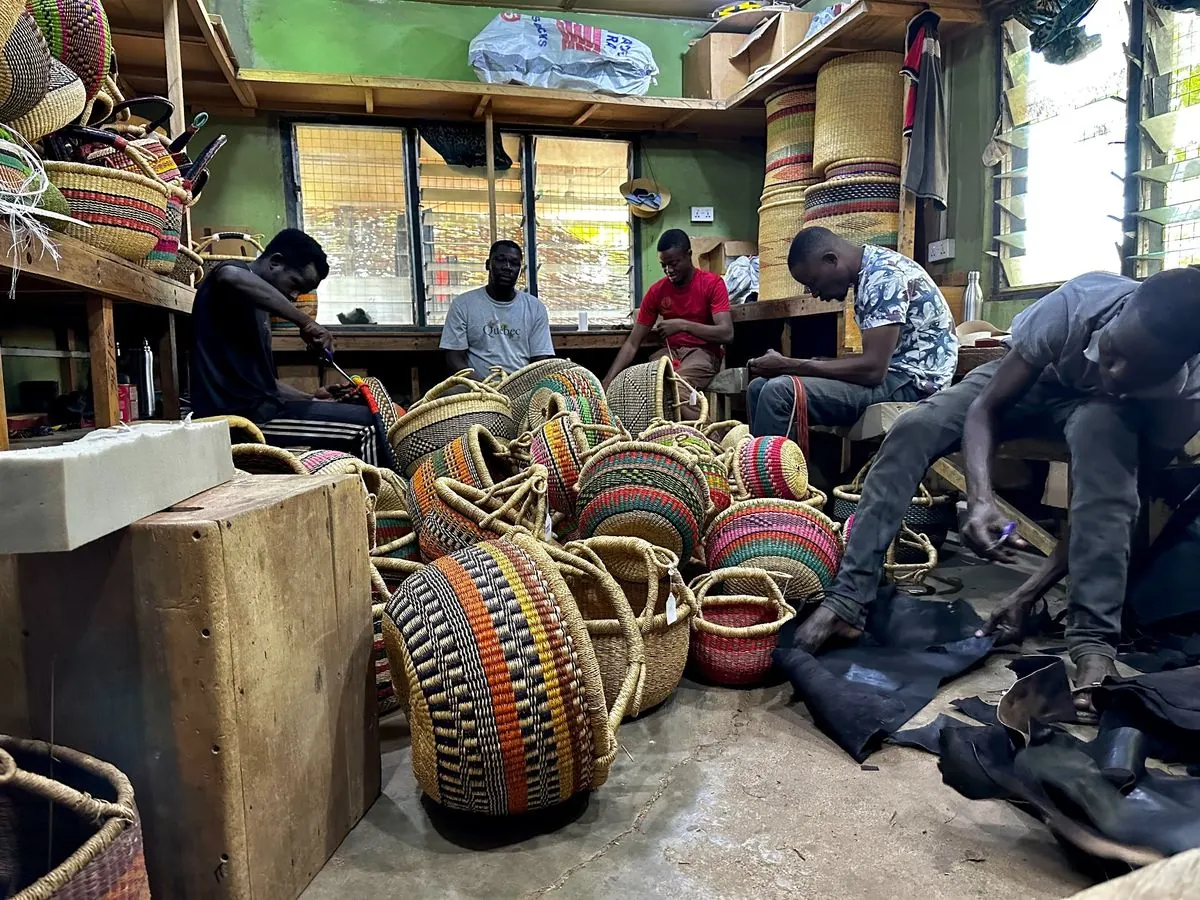
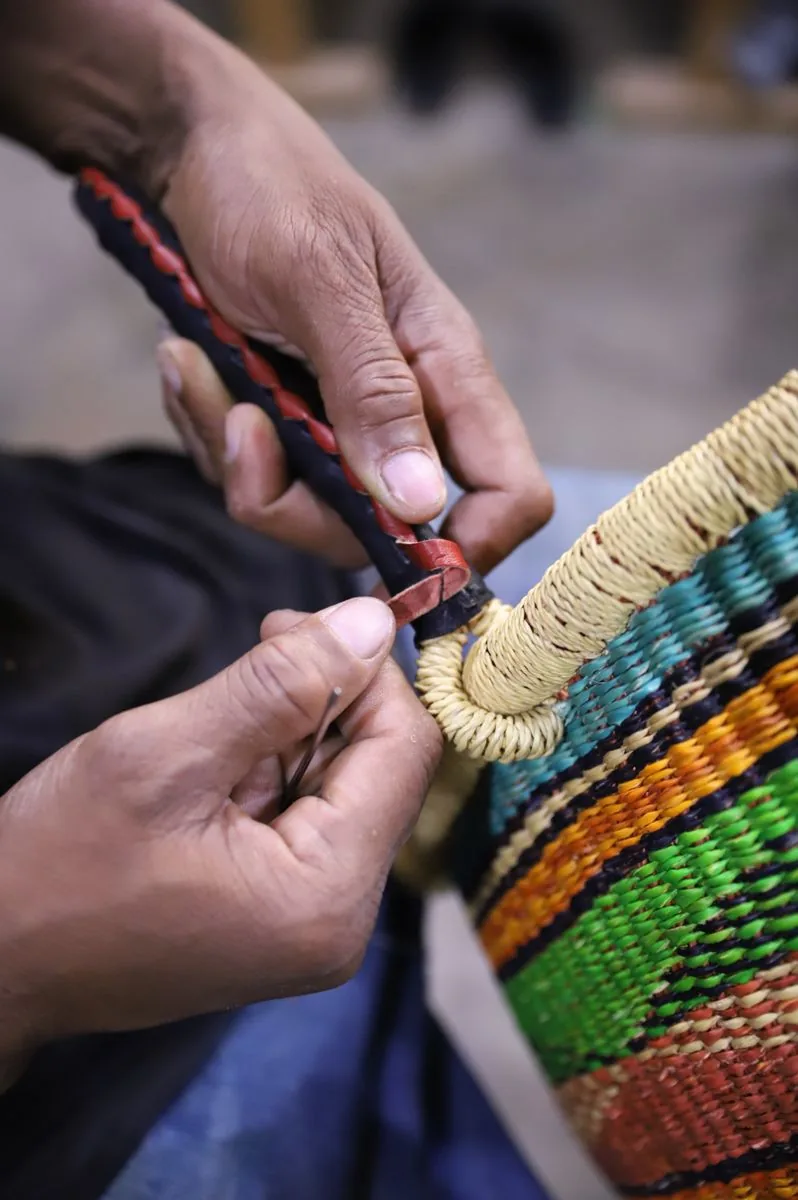
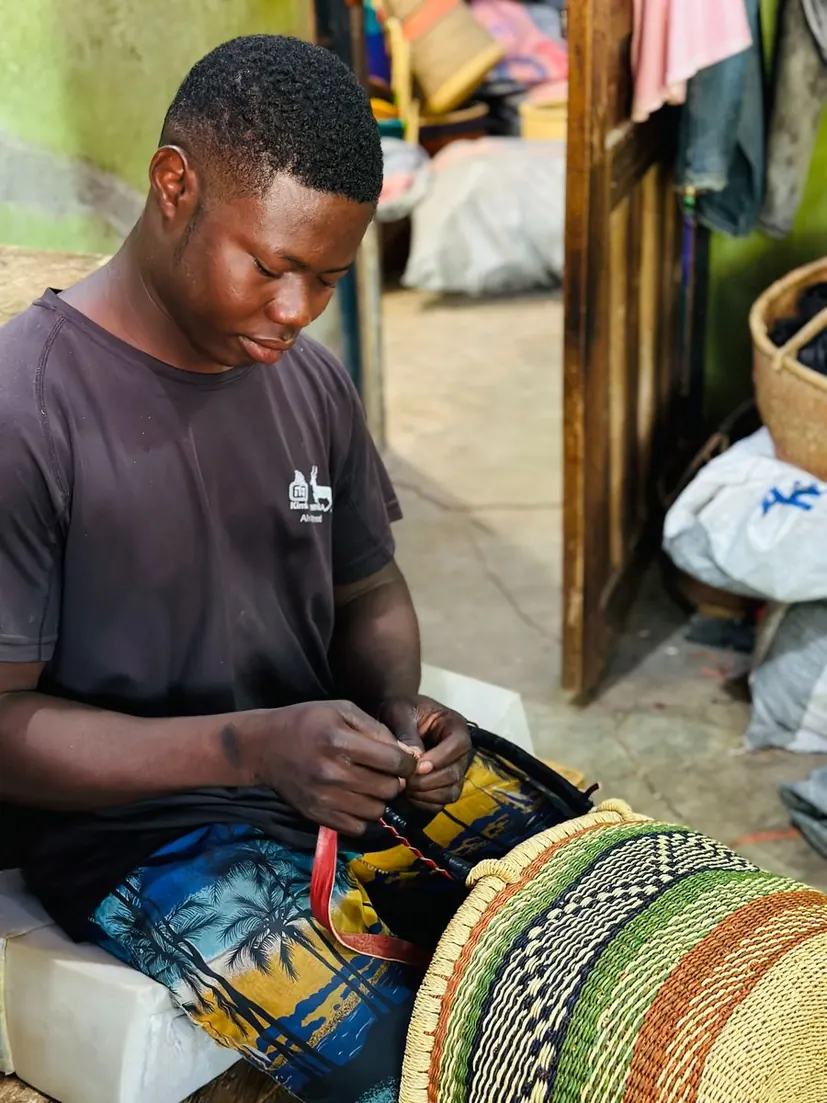
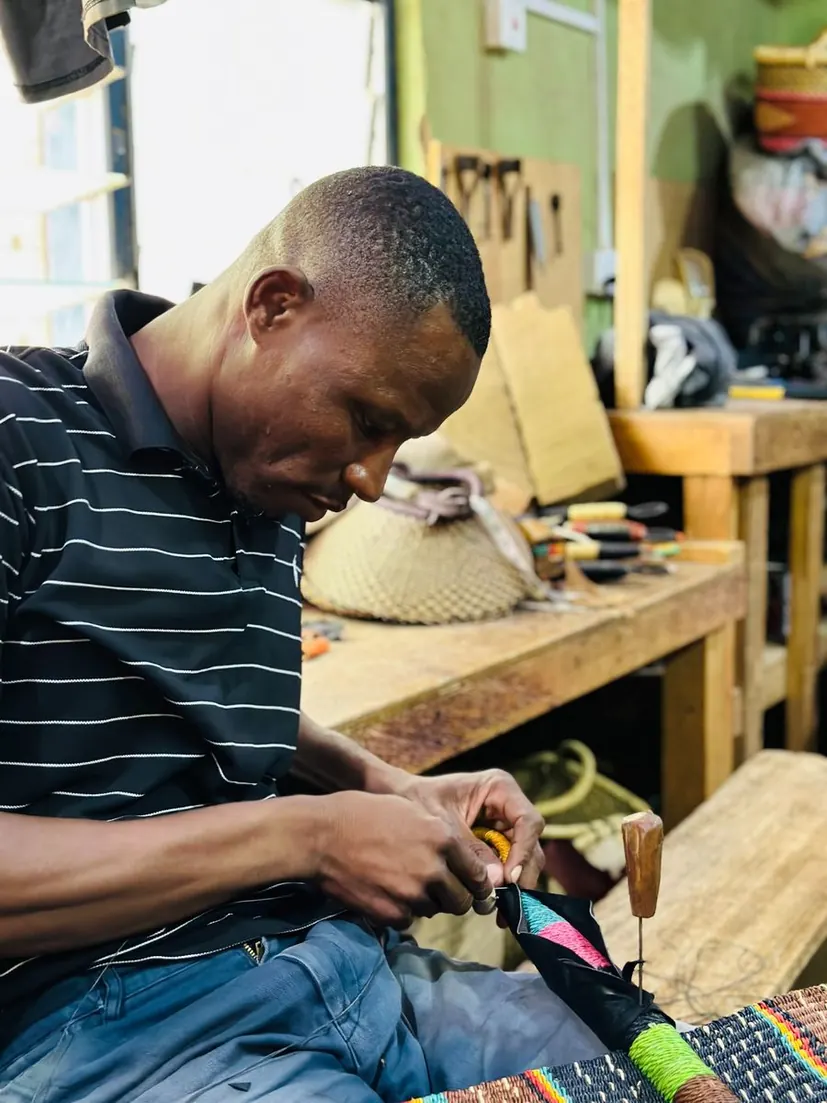
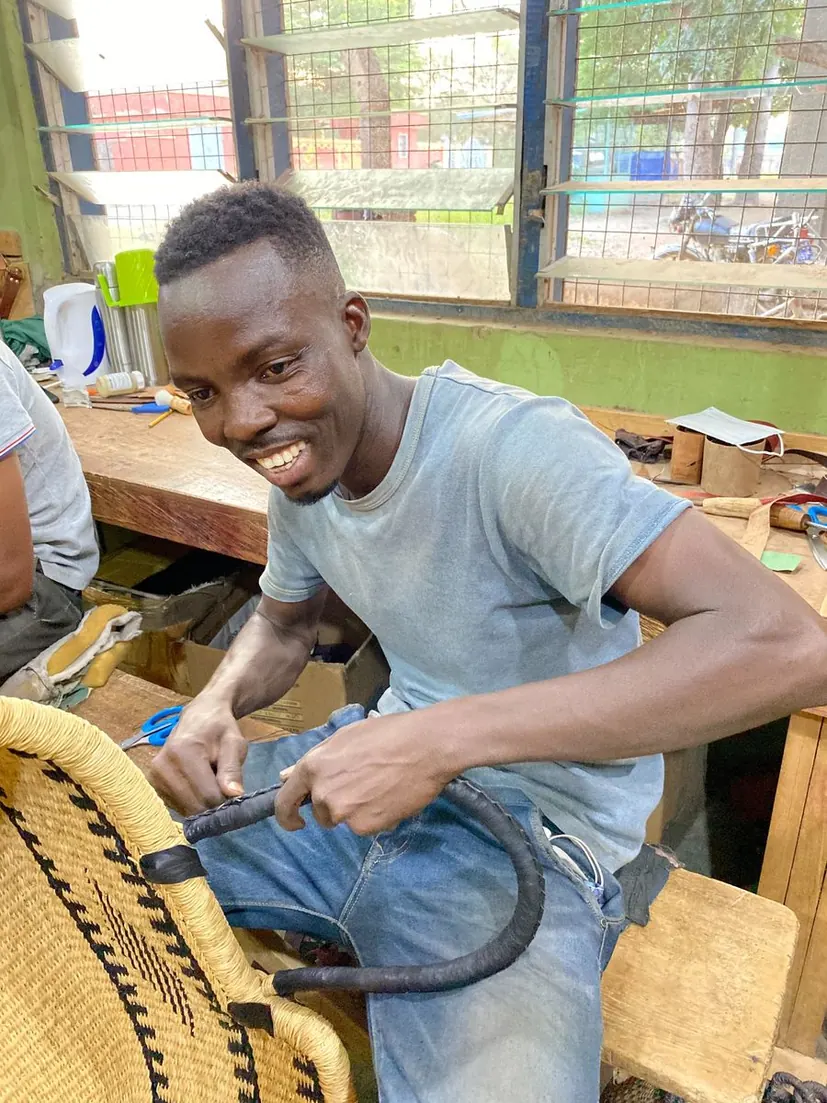
Some baskets now go to the leather room
Not every Baba Tree basket uses leather.
The Baba Tree has it's own in-house leather team to ensure quality control. We are one of the rare few that has an in-house leather crew.
For the ones that do, the woven basket is only part of the job.
The next stage happens in our leather room.
Handles are made and fitted by hand
Leather is cut, shaped and fitted to the finished basket.
Leather increases the strength of our basket handles markedly. It must be tight and formed to the handles perfectly for comfort and strength.
These are the people who made your baskets
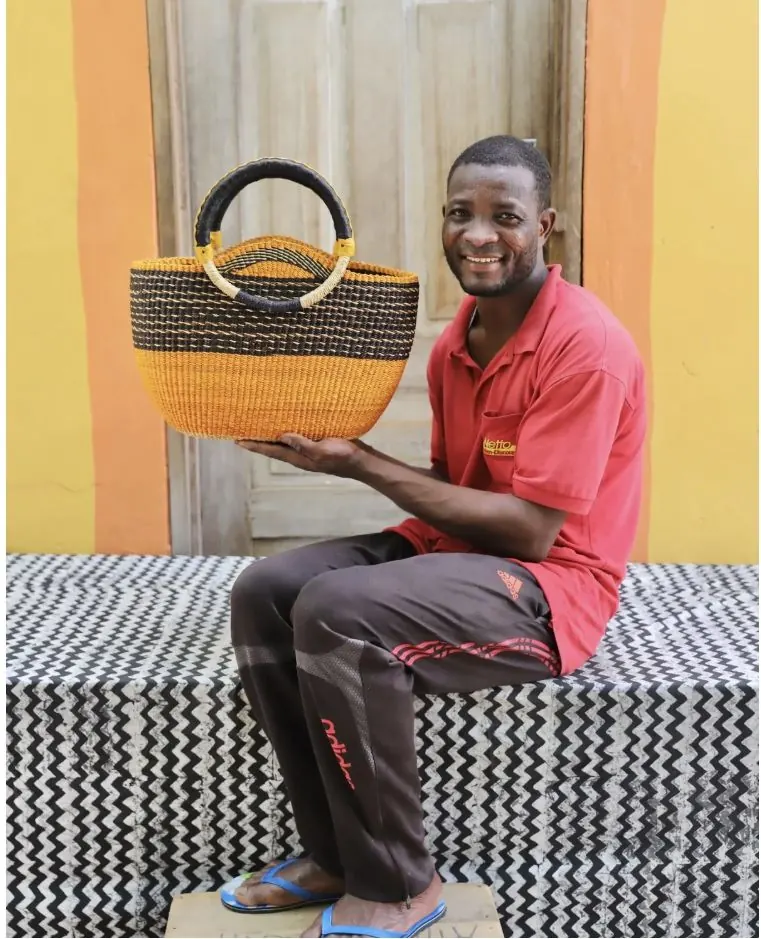
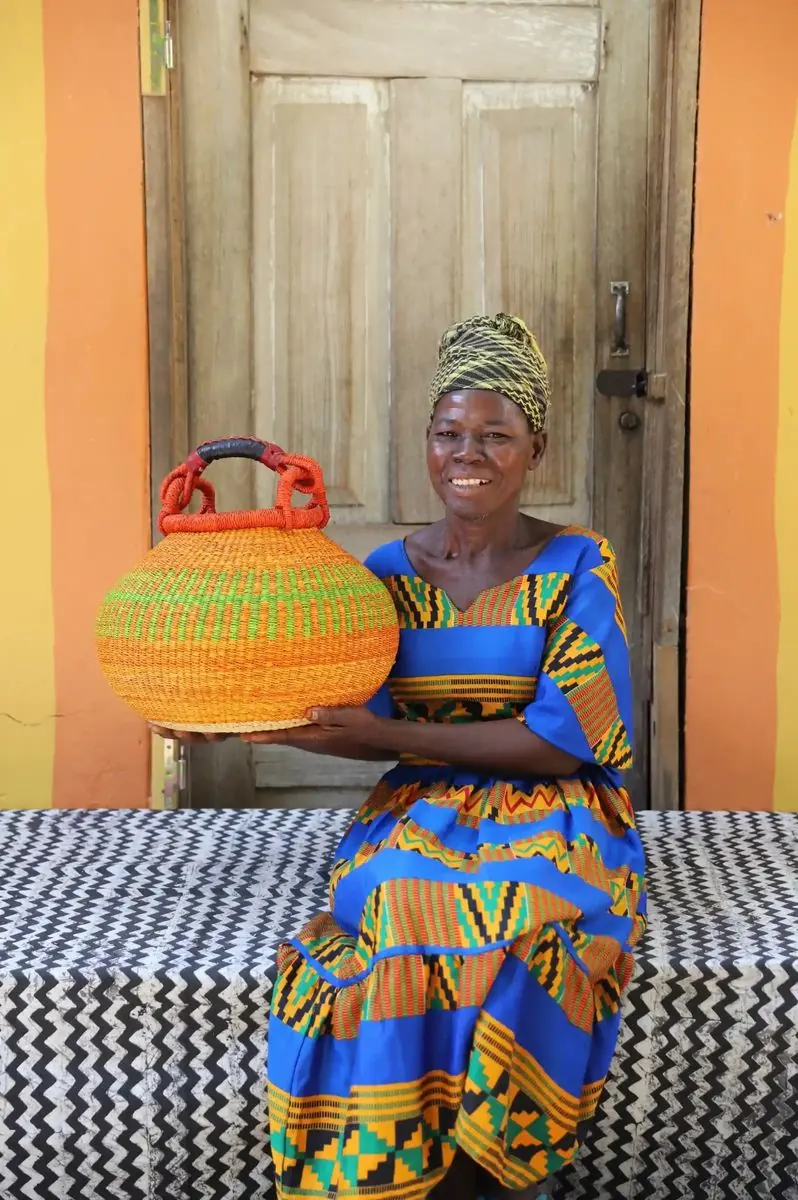
Every Baba Tree basket has a maker.
We do not hide them.
The weaver is named because authorship matters.
The finished basket and the person who made it belong in the same story.
And this is what the work looks like together
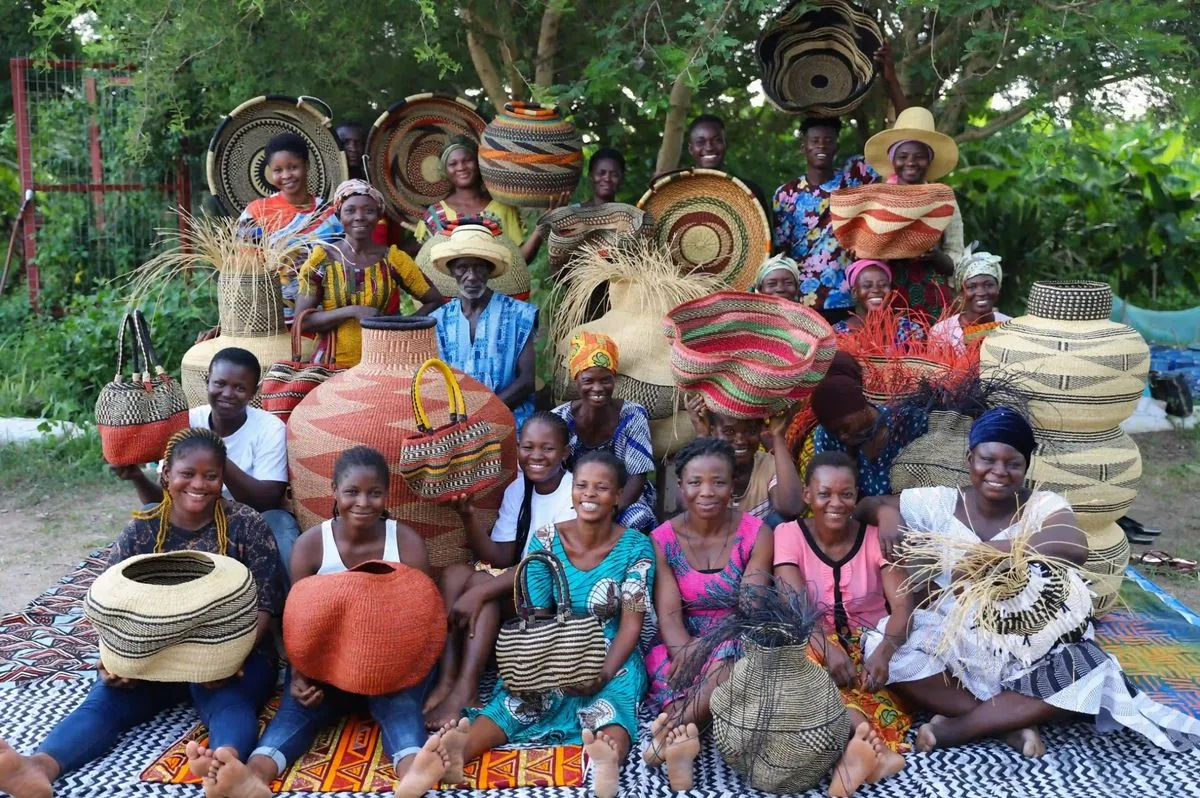
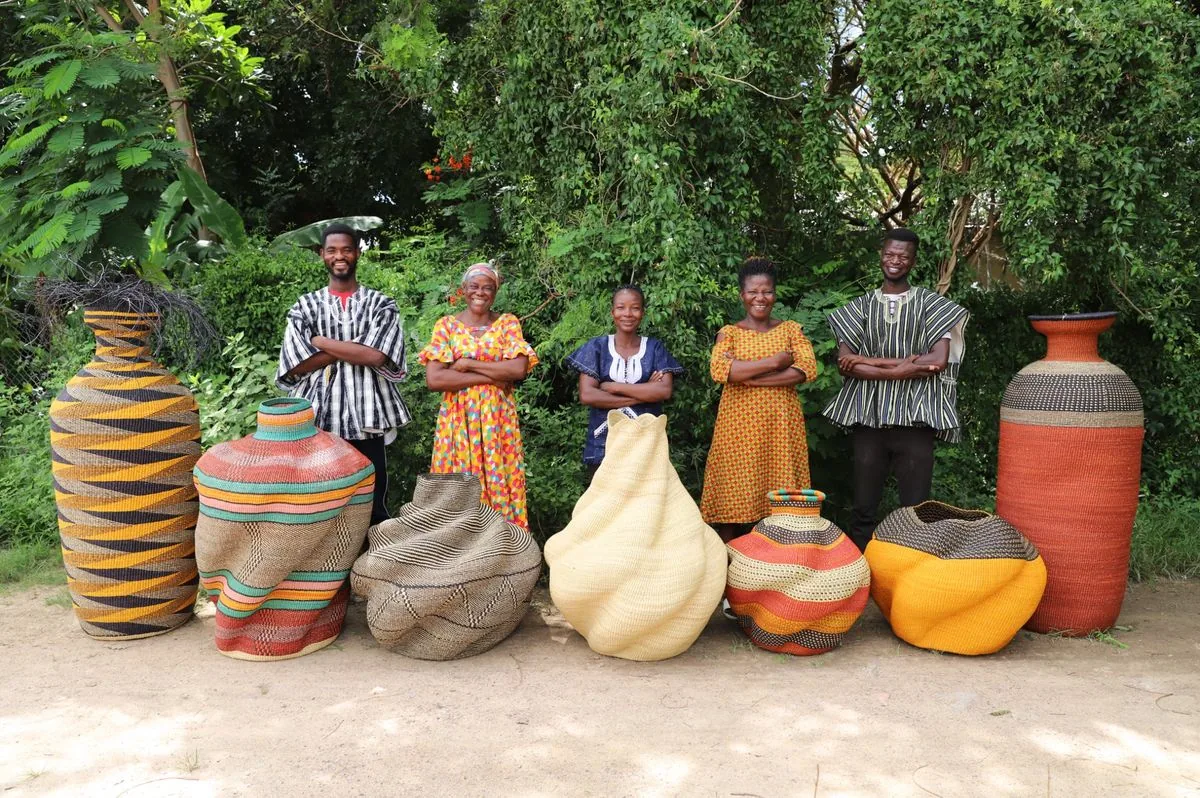
Across the compound, people may be preparing straw, dyeing, weaving, finishing and working with leather at the same time - not to mention the support crew of 30 staff members keeping the engine running to create a platform for what the weavers do.
The baskets may share a design.
They do not share a pair of hands.
From straw back to soil
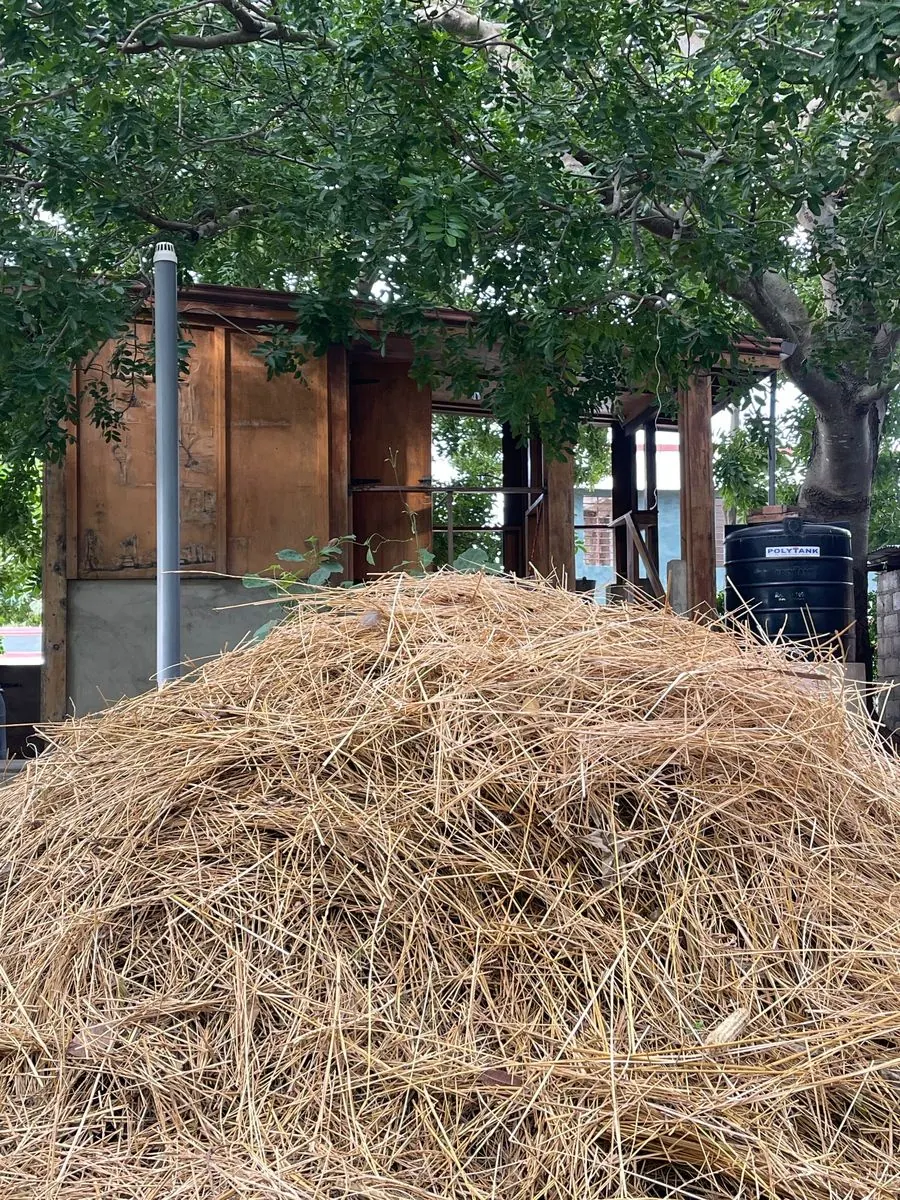
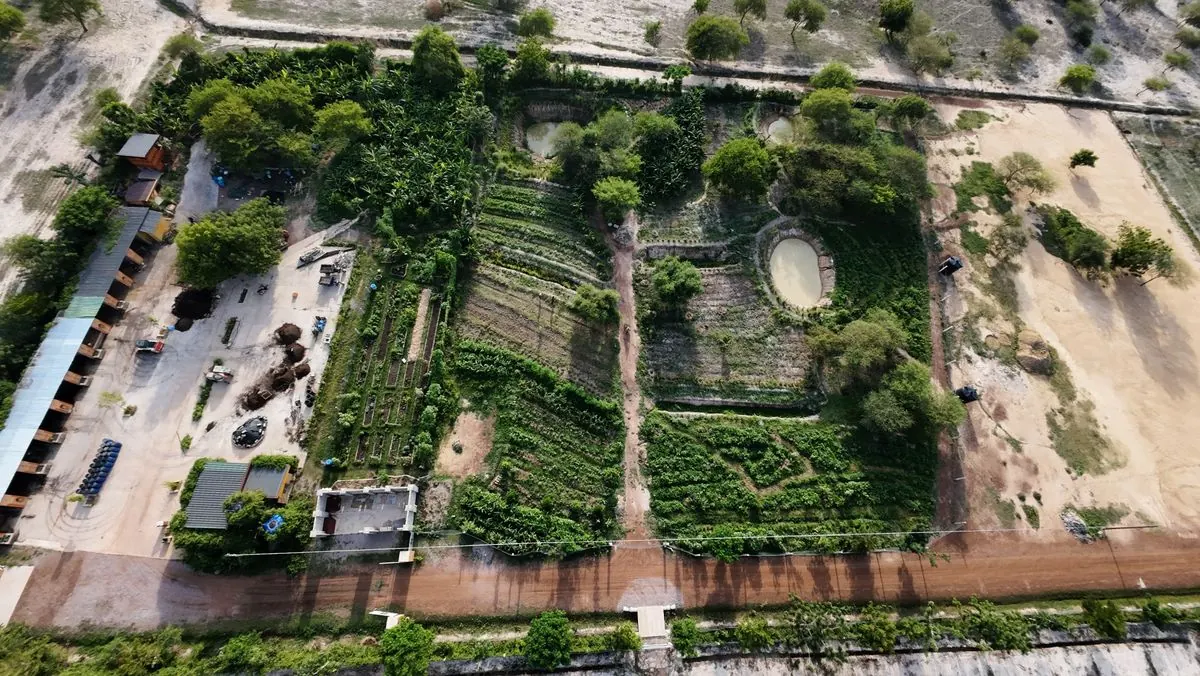
What happens to the leftover straw?
Natural, undyed straw offcuts do not have to become waste.
Back to the compost pile
Undyed natural straw goes into our compost system.
It breaks down with the other organic material from the compound and our land where we have created tons of biomass.
Straw becomes soil
The material that began as a plant becomes organic matter again.
That compost helps build the soil on Baba Tree land.
And then we grow more straw
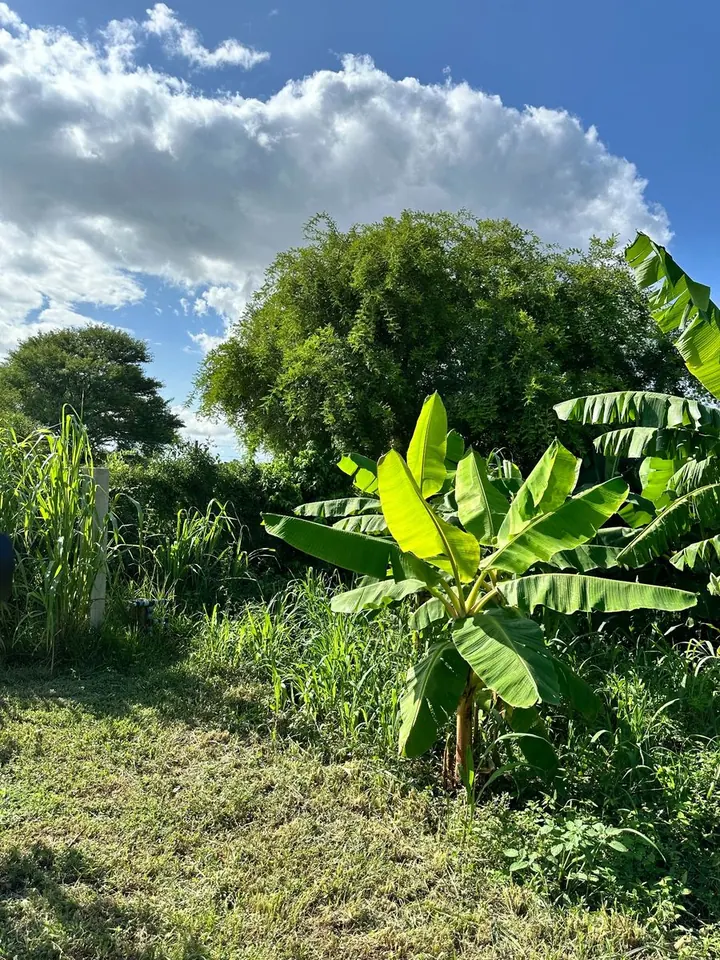
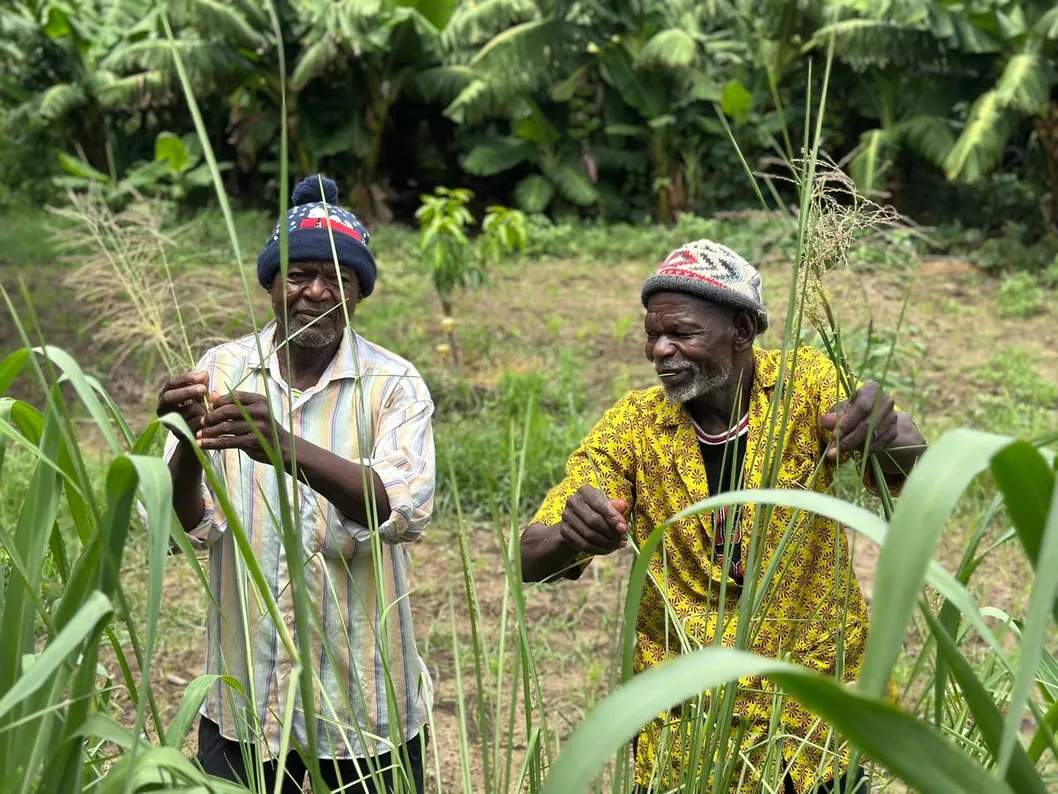
The cycle begins again.
Straw becomes basket.
Waste straw becomes compost.
Compost helps grow more straw.
Not perfectly. Not completely. But increasingly.
That is where we are going.
Are you coming with us?